Back to Blog
By Tim Weintraut | Alpha Wolf Impact | alphawolfimpact.com
In Article 1, I introduced you to the SKYX story. In Article 2, I went after the space heater problem. In Article 3, I showed you proof on the ground — the Marriott demo and the developer pipeline. In Article 4, I walked through the distribution machine — the channels getting this into homes, hotels, and apartments.
This one is different.
This is not just about what SKYX has done. It’s about what the platform makes possible.
And I want to be clear up front: a lot of what you’re about to read is my vision. Not a company announcement. I’ll label everything as Verified, My Take, or Speculation so you always know exactly what you’re looking at.
Let’s go.
Your smartphone before the App Store
Before I talk about ceilings, think about your phone.
In 2006, your phone made calls. It sent texts. It had a calculator and maybe a camera that took blurry photos. That was it. The hardware could do more, but the ecosystem didn’t exist.
Then the App Store showed up.
Suddenly, the same slab of glass in your pocket became:
The phone didn’t change. The infrastructure did. Apple gave developers a standard way to ship apps, get paid, update code, and access phone features. The complexity moved under the hood, and a million new ideas showed up almost overnight.
[My Take]: Look up for a second and think about what SKYX has already put in the ceiling:
An AI hub running on NVIDIA’s ecosystem with six “intelligence domains”: voice, audio, safety, environmental, behavioral, and predictive analytics
That’s already more functionality than any ceiling has ever had.
But in my view, we’re still at the 2006 phone stage. The real play is what happens when the ceiling becomes the building’s operating system, and other people start building for it.
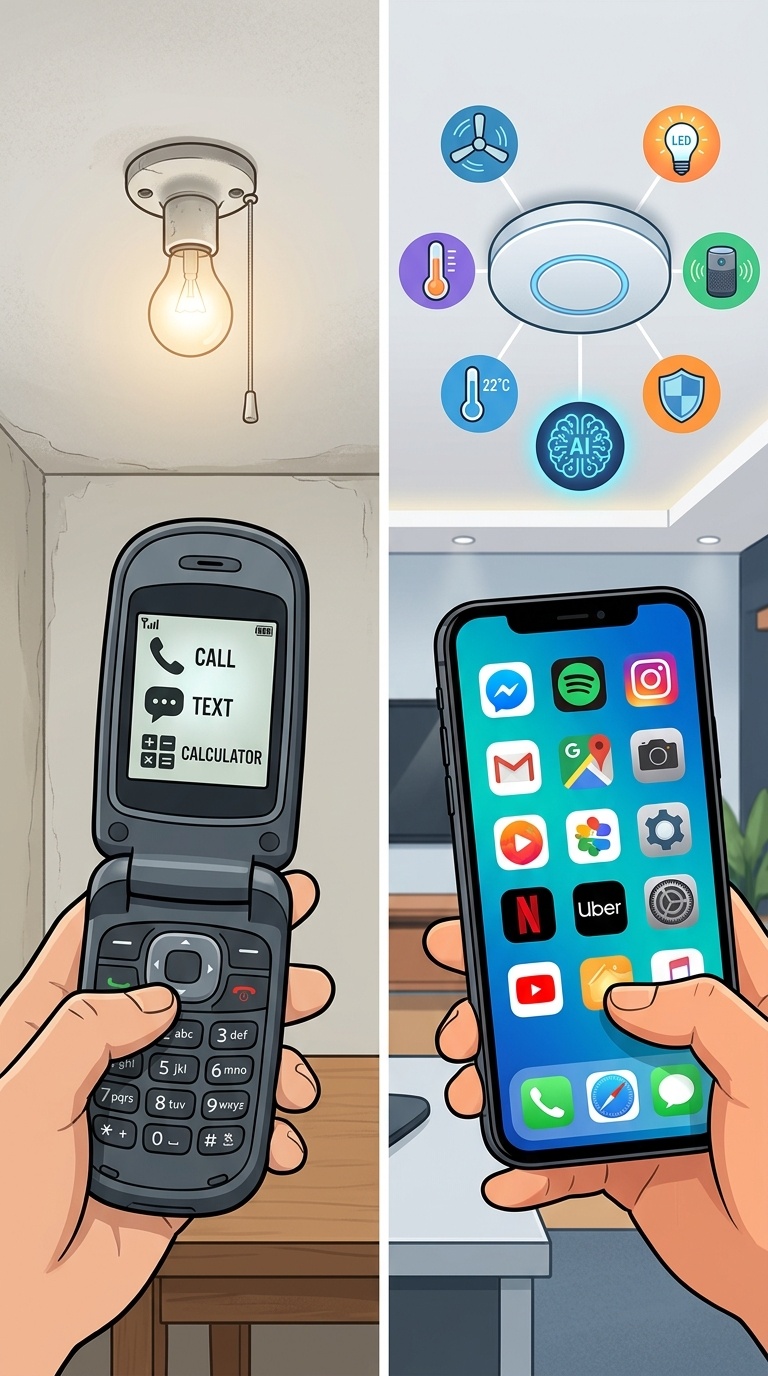
Imagine a Building App Store.
Not a metaphor. A real ecosystem. A property manager at a 300‑unit complex opens their dashboard. They don’t just see lights and thermostats. They see a marketplace of services — all plugging into the same SKYX infrastructure that’s already installed in every unit.
That’s the vision I want to walk you through. And I want to show you why the pieces are already on the table.
SoundHound: when the ceiling starts talking back
It sits there, eating counter space, listening from three feet off the ground, surrounded by toasters and coffee makers.
Now think about the ceiling.
The SKYX smart hub sits at the highest point in the room — the ideal position for microphones and speakers. No counter space. No visible cords. No separate install once the plug‑and‑play ceiling outlet is in.
The voice AI becomes part of the infrastructure, not a gadget you add later.
[Verified — SoundHound AI, CES 2026]: SoundHound AI launched its Amelia 7 agentic AI platform at CES 2026, extending voice commerce and conversational AI to vehicles, TVs, and smart devices. Their platform can order food, make reservations, pay for parking, book travel, and manage calendars and email through natural speech. It’s designed for high‑accuracy, low‑latency voice in noisy, real‑world environments, and already powers voice interfaces for multiple global automakers.
[Verified — SoundHound / NVIDIA]: SoundHound also demonstrated large‑language‑model experiences running on NVIDIA platforms, combining on‑device LLM with cloud AI to deliver advanced voice functionality right at the edge. They serve sectors like automotive, retail, financial services, healthcare, restaurants, and smart devices.
Here’s the connection.
Cars at 70 mph are loud — road noise, wind, music, kids arguing in the back seat. Drive‑throughs and restaurant kitchens are chaos. SoundHound built voice that works in those environments.
A hotel room is quieter than a freeway. An apartment bedroom is quieter than a drive‑through. A senior facility is quieter than a restaurant line.
[My Take]: If Amelia 7 can book a trip and order dinner from a car dashboard, imagine what it can do wired into a SKYX ceiling hub riding on NVIDIA’s AI infrastructure.
Simple examples:
The room responds. Hands‑free, eyes‑free, from the most natural point in the space: above you.
And this isn’t just about convenience for healthy 35‑year‑olds.
[My Take]: Think about:
A 78‑year‑old with mobility issues who falls while reaching for a wall switch.
A burn victim who can’t easily grip a thermostat dial. A post‑surgical patient who shouldn’t be getting out of bed to adjust lighting or temperature. Voice‑controlled ceiling infrastructure isn’t a toy. For some people, it’s the difference between independent living and assisted living.
The utility “truth package”: seeing underground from the ceiling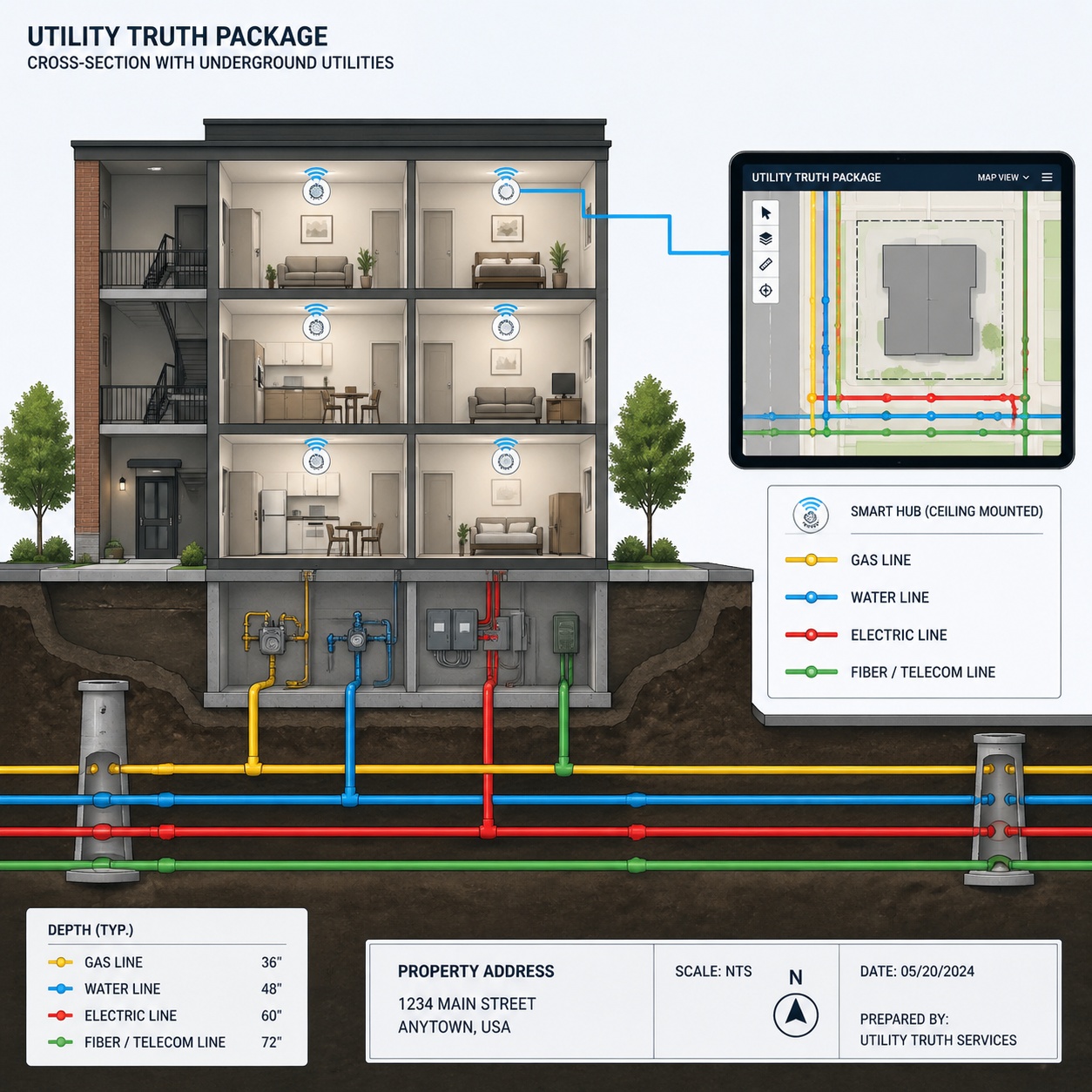
Now let’s shift to something almost nobody connects to ceilings — underground utilities.
Every property sits on top of a hidden maze:
Most owners don’t have a trusted, digital, up‑to‑date record of what’s under their feet. That’s how you get a backhoe taking out a gas main or a landscaping crew cutting a fiber trunk.
[Verified — Common Ground Alliance 2024]: The Common Ground Alliance logged 196,977 unique underground utility damage incidents in 2024, with its damage index rising year‑over‑year. They estimate excavation‑related damages cost the U.S. roughly $30 billion per year, including repairs, emergency response, property damage, injuries, business interruption, and other indirect costs.
In plain language: we’re blowing up pipes and cables we already paid to install because we can’t reliably see them.
[Verified — ProStar Holdings]: ProStar Holdings is a SaaS geospatial intelligence company. Its PointMan platform provides precision subsurface utility mapping and digital records compliant with ASCE 38 standards — capturing GPS‑accurate positions and attributes of buried utilities. They serve major infrastructure players that need to know exactly where gas, water, electric, and fiber assets are buried.
[My Take]: Now imagine this workflow on a new 300‑unit community:
During construction, the developer uses PointMan (or a similar platform) to map every pipe, conduit, and cable on site. GPS‑verified. Digitally documented. After construction, that dataset doesn’t vanish into a plan room. It becomes part of the property’s permanent digital twin, accessible through the same SKYX building dashboard that runs the lights and fans.
Use cases:
[My Take]: To be precise, this isn’t about plumbing inside the walls. It’s about the site‑level critical infrastructure — gas, water, electric, telecom, sewer — mapped and stored as part of the building’s permanent intelligence layer. What could that do for resale values? Ask AI
PointManis used to solve this for big infrastructure owners. The logical next step is to surface that data through in‑building platforms like SKYX, so it’s actually used.
[Speculation]: ProStar and SKYX have not announced any integration. I’m describing a logical convergence: one stack maps what’s in the ground; the other provides the in‑building operating system that owners and managers actually interact with. Whether they partner is up to their business teams. The fit is obvious. The timing is unknown.
Build‑to‑rent: smart lease vs standard lease
Now let’s talk about build‑to‑rent and recurring revenue.
[Verified — AMH]: American Homes 4 Rent (AMH) manages 57,000+ single‑family rentals and is building thousands more purpose‑built rental homes. Their platform already includes smart‑home features — smart thermostats, locks, and digital portals aimed at giving residents a unified experience.
[Verified — Rental forecasts]: Industry forecasts for 2026 call for 2–3% rent growth, with single‑family rentals and build‑to‑rent communities expected to see sustained demand as affordability pressures push more families into rentals.
The challenge today:
Residents end up with five or six apps to manage one home. Operators juggle different support channels, different firmware updates, and mismatched data.
Now picture a build‑to‑rent community wired with SKYX ceilings in every room.
[My Take]: Use some simple math:
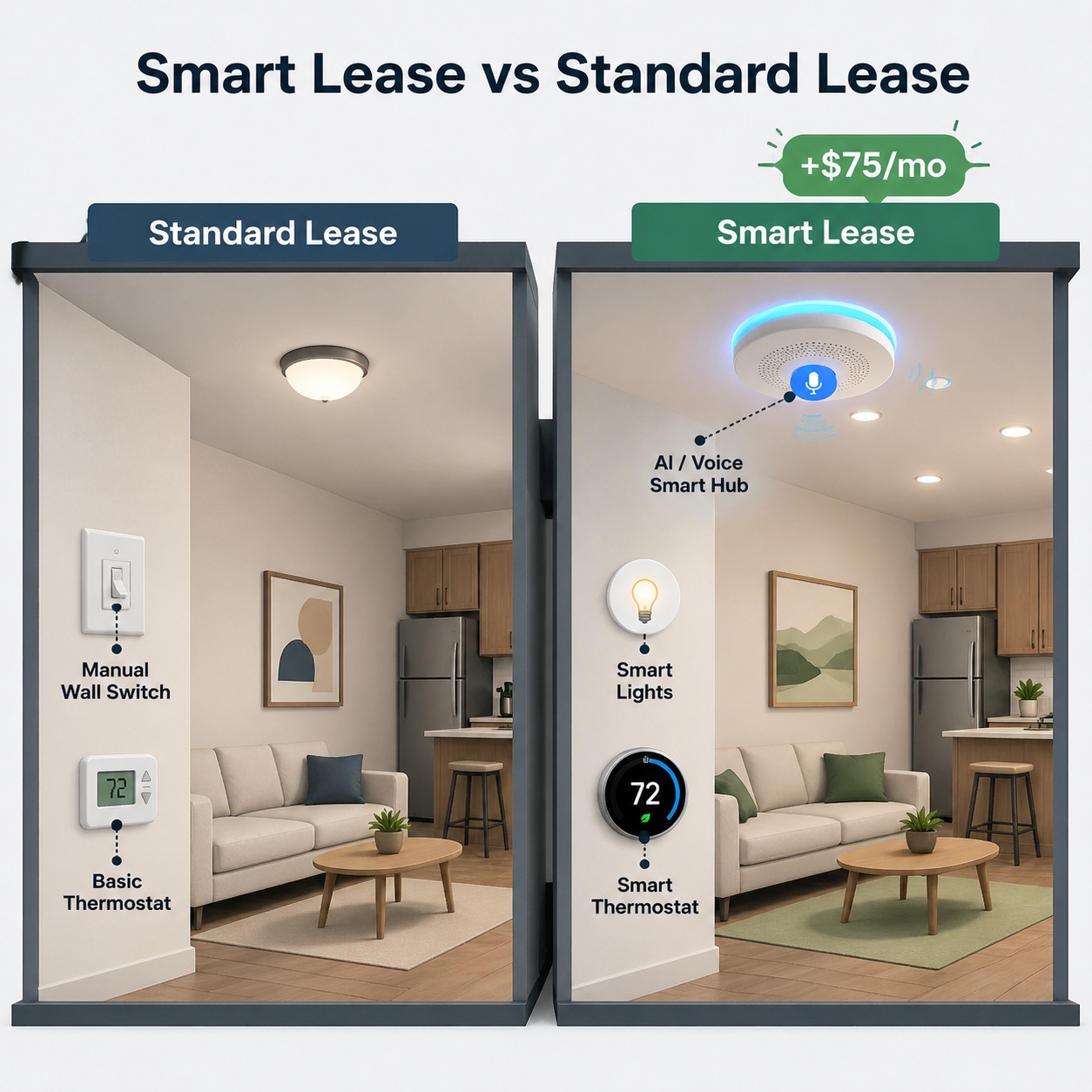
Suppose a build‑to‑rent operator charges an extra $75/month for the smart tier.
At 10,000 units, that’s $9M in incremental rent per year. The enabling cost could be a one‑time plug‑in device that installs in minutes.
Multiply that across an industry building tens of thousands of new units per year, and you’re not just selling hardware. You’re building a subscription platform for both operators and SKYX.
One last application before we zoom out: healthcare.
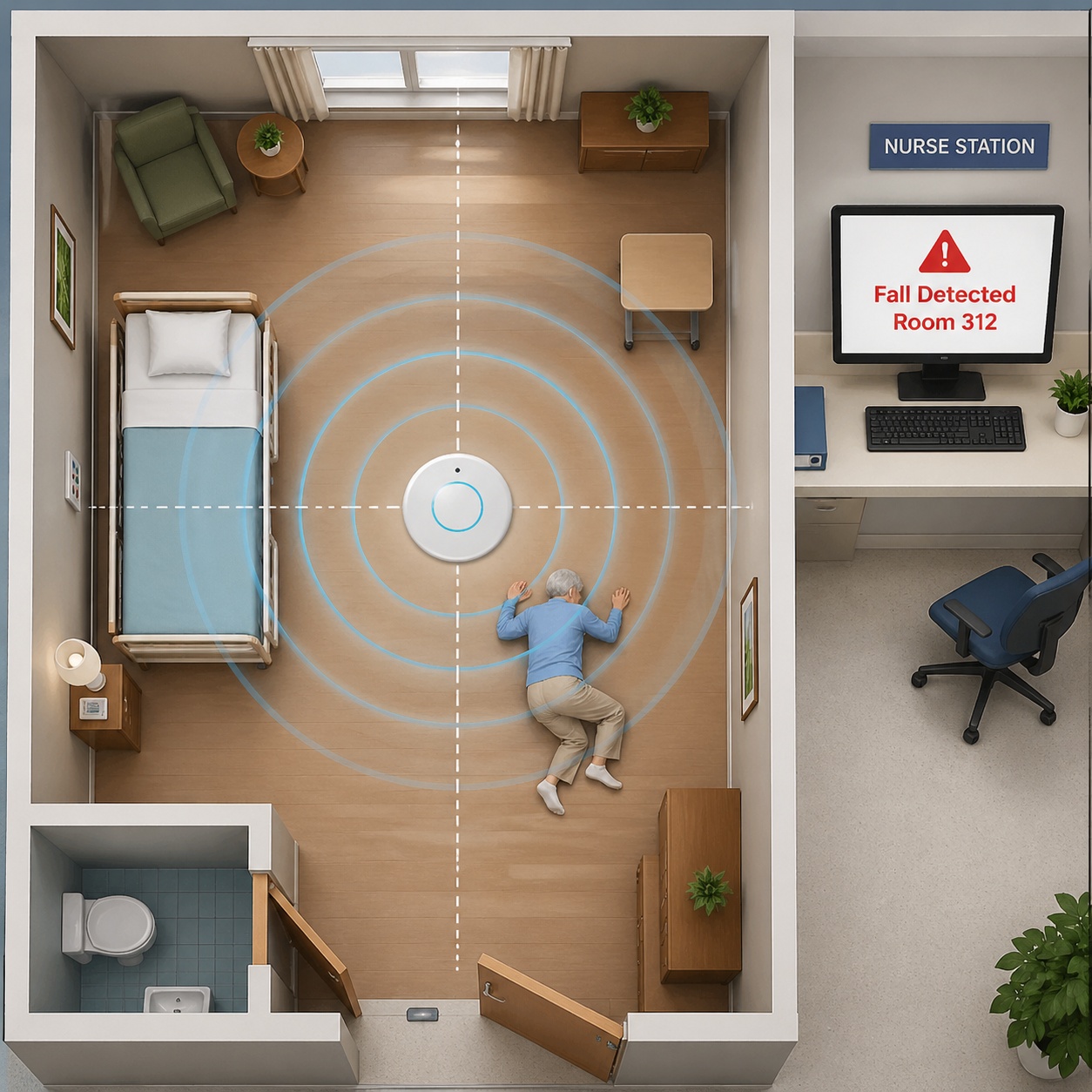
[Verified — SKYX/NVIDIA]: In SKYX’s AI collaboration announcement with NVIDIA’s Connect Program, they explicitly list fall detection and elderly monitoring as target applications for their AI‑enabled ceiling platform. The six intelligence domains include safety, behavioral, and predictive analytics — exactly what you need for automated fall detection and real‑time alerts.
[My Take]: Picture:
A senior‑care room where an 82‑year‑old falls at 2 a.m. In a traditional facility, they have to reach a wall button or a cord. If they can’t, nothing happens. In a ceiling‑equipped room, either the fall is detected automatically, or the resident simply says “help,” and the system routes the alert. No button to reach.
A hospital oncology unit where every switch, dial, and button is a potential infection vector. In a ceiling‑controlled room, you can go zero‑touch: voice lighting, voice temperature, voice nurse call. Less surface contact. Better infection control.
[Speculation]: No hospital or senior‑care system has publicly deployed SKYX yet. Clinical validation, regulatory approvals, and integration with medical systems take time. But the capabilities—fall detection, safety analytics, voice control—are already described in the NVIDIA collaboration. The need is obvious. The timing is uncertain.
[My Take]: What “ceiling apps” could look like
To make this less abstract, here are a few speculative “ceiling apps” that become thinkable once you have a standardized, smart, weight‑supporting ceiling interface everywhere:
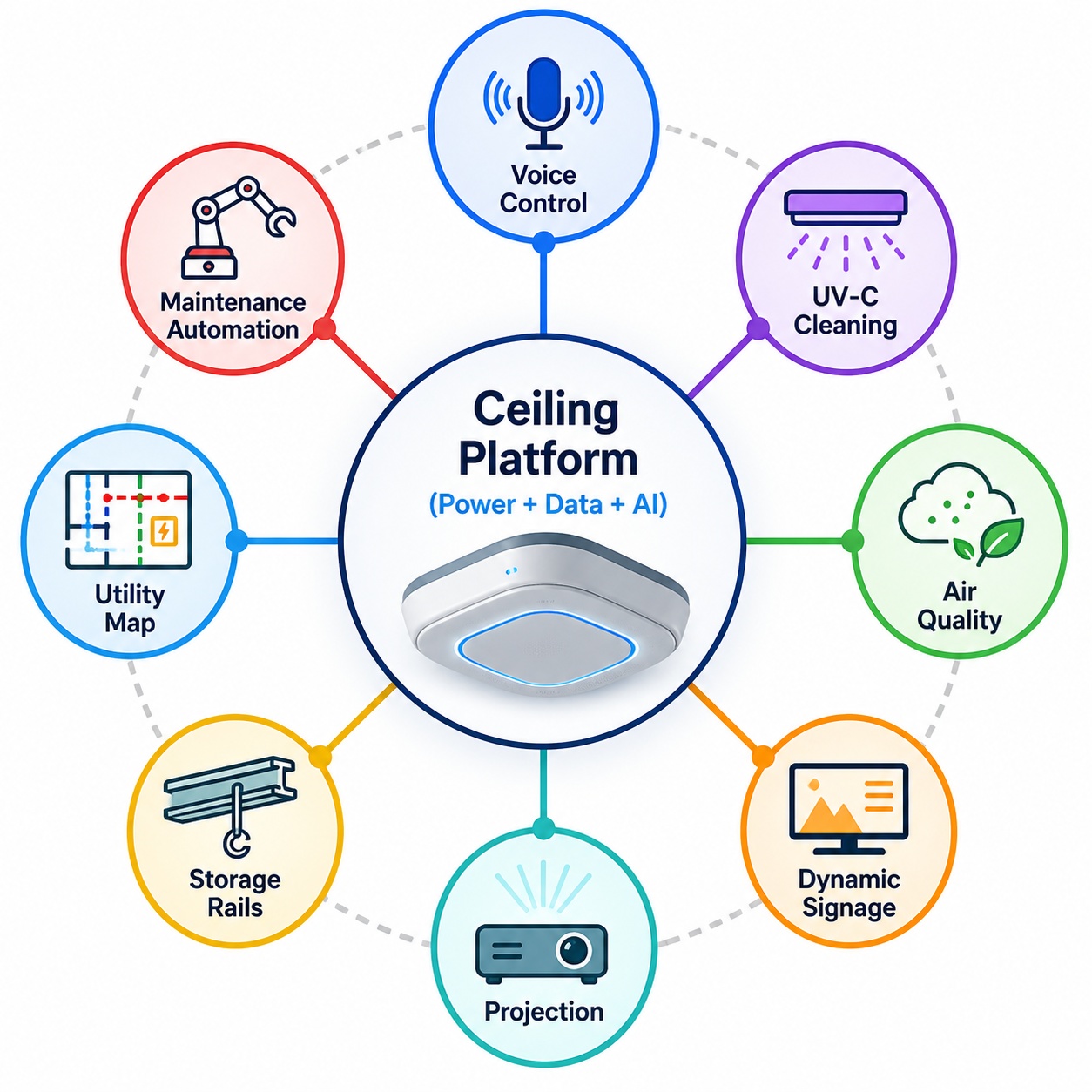
UV‑C disinfection bots
A compact UV‑C module is docked in the ceiling. At 2 a.m., it descends to a fixed height over kitchen counters or bathroom surfaces, runs a timed UV cycle to reduce microbial load, then docks back up. Power, safety interlocks, and scheduling run through the SKYX hub.
Air‑quality sentinels
Ceiling modules continuously sampling air for particulates, VOCs, CO₂, or smoke. When thresholds are hit, they automatically adjust fans, notify occupants, or talk to building systems.
Dynamic safety signage
In hotels or dorms, ceiling devices that change color and arrows in real time during emergencies — literally lighting the path of egress based on which routes are safe.
Contextual projectors
Projectors that live in the ceiling and can drop instructions onto a counter (“recipe mode”), a workbench (“assembly mode”), or a hospital tray (“medication mode”), then retract and power down.
Ceiling‑rail logistics
Ceiling‑mounted rails that move lights, sensors, or small storage pods along tracks in tight spaces — reconfigurable rooms without moving furniture, controlled by the hub.
None of these are announced SKYX products today.
They’re examples of what becomes practical when the hard part — safe power, mechanical support, data, and control in the ceiling — is standardized and deployed at scale.
The ceiling as an operating system
Here’s the deeper point: none of these “apps” depends on all the others.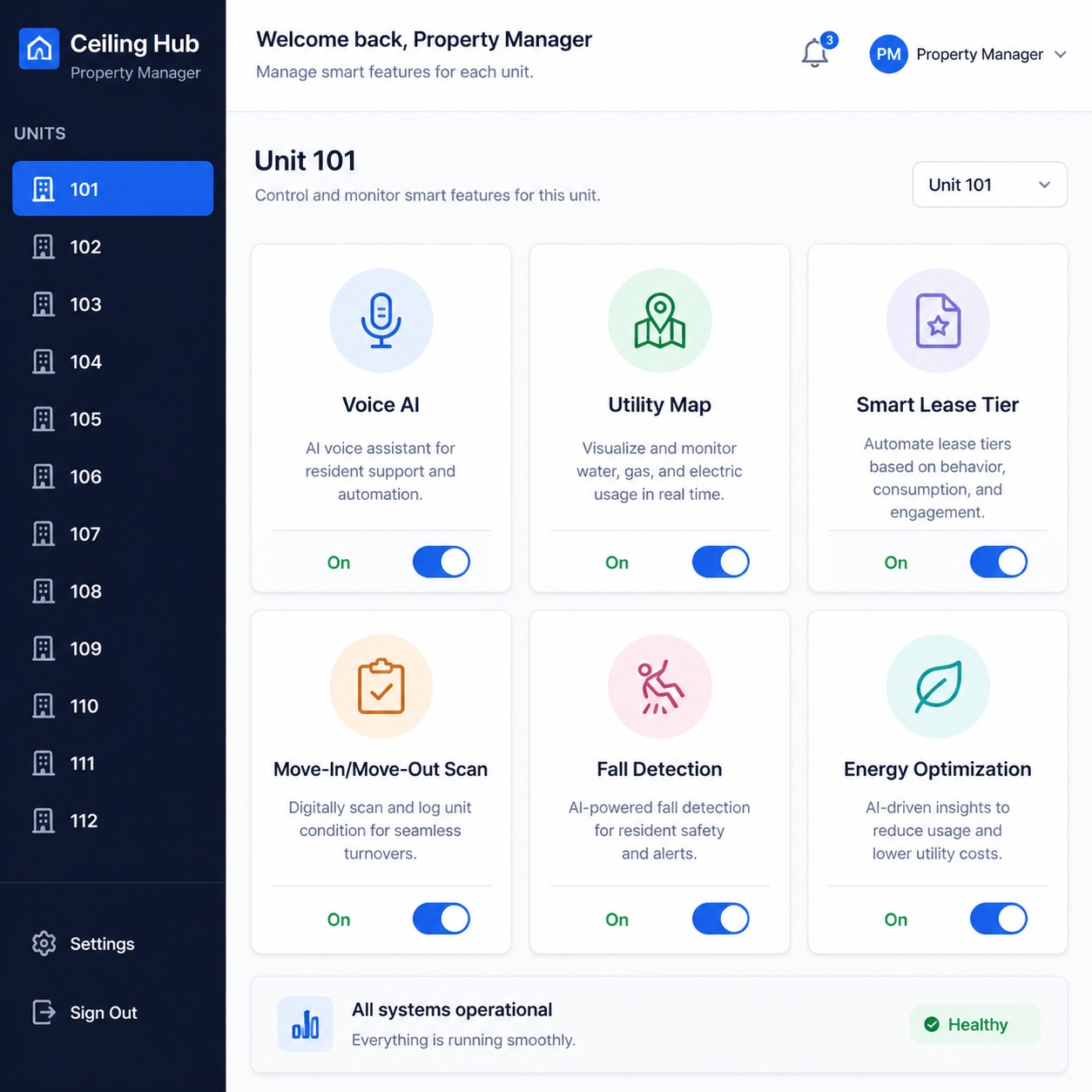
Each integration stands alone. Each adds value on its own. But as you layer them together, the ceiling becomes the building’s central nervous system.
[Verified — SKYX Corporate Update]: SKYX’s own materials talk about revenue streams that go beyond hardware: product sales, royalties, licensing, subscription services, monitoring, and the sale of global rights. They expect to deploy over 100,000 products into homes and units by the end of 2026 and more than 1 million units across current projects over time.
[My Take]: Over 1 million installed units isn’t just a hardware number. It’s an installed base. Every unit is a potential node for voice AI, environmental sensing, safety monitoring, maintenance automation, or future third‑party apps — the way every smartphone became an App Store customer.
Cloud computing did this for servers. The App Store did it for mobile. Once the infrastructure became simple and consistent, ideas that used to be science fiction became businesses.
A standardized, AI‑enabled ceiling platform offers the same kind of springboard for everything that happens overhead.
Truth vs speculation
To keep our agreement:
Verified (from public sources):
SoundHound AI’s Amelia 7 agentic AI platform and its NVIDIA collaboration for in‑vehicle and device‑level voice AI.
Common Ground Alliance’s damage counts and ~$30B annual societal cost from underground utility strikes.
ProStar’s PointMan as an ASCE 38‑compliant subsurface utility mapping platform.
AMH’s 57k+ single‑family rentals and existing smart‑home/AI‑driven resident platform work.
Rental growth forecasts in the 2–3% range for 2026.
SKYX’s NVIDIA collaboration listing fall detection, elderly monitoring, and six intelligence domains.
SKYX’s stated revenue streams and 100k+/1M+ unit deployment expectations.
CPSC’s March 2024 meeting with SKYX and the NEISS‑backed 2026 NEC public input around safer ceiling installs.
NEC 2026 development work considering “ceiling‑mounted multi‑function platforms.”
My Take:
Speculation:
What you can do right now
I’ll end this one with a simple ask:
Go into your kitchen. Your bedroom. Your office. Look up. Right now, you probably see a light, maybe a fan, maybe a smoke detector with a dead battery you’ve been ignoring.
Now picture that same ceiling:
That’s the Building App Store idea.
Not someday. The infrastructure is being installed now. The question is how fast the ecosystem catches up — and whether the market keeps pricing SKYX like a parts vendor while that happens.
Article 6 is next: we’ll break down the people building this platform — who they are, what they’ve done before, and why execution is ultimately a team sport.
SKYX1-6 Series · Part 5 of 6
View full seriesSKYX Article 5 Future Proof: The Building App Store
The Platform Vision for the Ceiling of the Future: This is not just about what SKYX has done. It’s about what the platform makes possible. I want to be clear up front: a lot of what you’re about to read is my vision. Not a company announcement.
April 26, 2026
By Tim Weintraut | Alpha Wolf Impact | alphawolfimpact.com
In Article 1, I introduced you to the SKYX story. In Article 2, I went after the space heater problem. In Article 3, I showed you proof on the ground — the Marriott demo and the developer pipeline. In Article 4, I walked through the distribution machine — the channels getting this into homes, hotels, and apartments.
This one is different.
This is not just about what SKYX has done. It’s about what the platform makes possible.
And I want to be clear up front: a lot of what you’re about to read is my vision. Not a company announcement. I’ll label everything as Verified, My Take, or Speculation so you always know exactly what you’re looking at.
Let’s go.
Your smartphone before the App Store
Before I talk about ceilings, think about your phone.
In 2006, your phone made calls. It sent texts. It had a calculator and maybe a camera that took blurry photos. That was it. The hardware could do more, but the ecosystem didn’t exist.
Then the App Store showed up.
Suddenly, the same slab of glass in your pocket became:
- Navigation
- Banking
- Music production
- Health monitoring
- Language translation
- Ride‑hailing
The phone didn’t change. The infrastructure did. Apple gave developers a standard way to ship apps, get paid, update code, and access phone features. The complexity moved under the hood, and a million new ideas showed up almost overnight.
[My Take]: Look up for a second and think about what SKYX has already put in the ceiling:
- Lighting
- Fans
- Heating
- Emergency systems
- Smoke and CO detection
- Cameras and speakers in some models
An AI hub running on NVIDIA’s ecosystem with six “intelligence domains”: voice, audio, safety, environmental, behavioral, and predictive analytics
That’s already more functionality than any ceiling has ever had.
But in my view, we’re still at the 2006 phone stage. The real play is what happens when the ceiling becomes the building’s operating system, and other people start building for it.
Imagine a Building App Store.
Not a metaphor. A real ecosystem. A property manager at a 300‑unit complex opens their dashboard. They don’t just see lights and thermostats. They see a marketplace of services — all plugging into the same SKYX infrastructure that’s already installed in every unit.
That’s the vision I want to walk you through. And I want to show you why the pieces are already on the table.
SoundHound: when the ceiling starts talking back
- Let’s start with voice.
- Right now, if you want a voice assistant at home, you buy a plastic puck. You:
- Put it on the counter
- Plug it into a wall outlet
- Connect Wi‑Fi
- Walk through a setup app
It sits there, eating counter space, listening from three feet off the ground, surrounded by toasters and coffee makers.
Now think about the ceiling.
The SKYX smart hub sits at the highest point in the room — the ideal position for microphones and speakers. No counter space. No visible cords. No separate install once the plug‑and‑play ceiling outlet is in.
The voice AI becomes part of the infrastructure, not a gadget you add later.
[Verified — SoundHound AI, CES 2026]: SoundHound AI launched its Amelia 7 agentic AI platform at CES 2026, extending voice commerce and conversational AI to vehicles, TVs, and smart devices. Their platform can order food, make reservations, pay for parking, book travel, and manage calendars and email through natural speech. It’s designed for high‑accuracy, low‑latency voice in noisy, real‑world environments, and already powers voice interfaces for multiple global automakers.
[Verified — SoundHound / NVIDIA]: SoundHound also demonstrated large‑language‑model experiences running on NVIDIA platforms, combining on‑device LLM with cloud AI to deliver advanced voice functionality right at the edge. They serve sectors like automotive, retail, financial services, healthcare, restaurants, and smart devices.
Here’s the connection.
Cars at 70 mph are loud — road noise, wind, music, kids arguing in the back seat. Drive‑throughs and restaurant kitchens are chaos. SoundHound built voice that works in those environments.
A hotel room is quieter than a freeway. An apartment bedroom is quieter than a drive‑through. A senior facility is quieter than a restaurant line.
[My Take]: If Amelia 7 can book a trip and order dinner from a car dashboard, imagine what it can do wired into a SKYX ceiling hub riding on NVIDIA’s AI infrastructure.
Simple examples:
- “Set sleep mode.”
- Lights dim, the fan adjusts, the heat drops two degrees.
- “Call maintenance — the kitchen light is flickering.”
- The hub logs the request, identifies the fixture, checks warranty status, and routes the work order.
- “Lock the front door.”
- “Play my morning playlist.”
- “Read me my calendar.”
The room responds. Hands‑free, eyes‑free, from the most natural point in the space: above you.
And this isn’t just about convenience for healthy 35‑year‑olds.
[My Take]: Think about:
A 78‑year‑old with mobility issues who falls while reaching for a wall switch.
A burn victim who can’t easily grip a thermostat dial. A post‑surgical patient who shouldn’t be getting out of bed to adjust lighting or temperature. Voice‑controlled ceiling infrastructure isn’t a toy. For some people, it’s the difference between independent living and assisted living.
The utility “truth package”: seeing underground from the ceiling
Now let’s shift to something almost nobody connects to ceilings — underground utilities.
Every property sits on top of a hidden maze:
- Gas lines
- Water mains
- Fiber runs
- Electrical conduits
- Sewer lines
- Telecom
Most owners don’t have a trusted, digital, up‑to‑date record of what’s under their feet. That’s how you get a backhoe taking out a gas main or a landscaping crew cutting a fiber trunk.
[Verified — Common Ground Alliance 2024]: The Common Ground Alliance logged 196,977 unique underground utility damage incidents in 2024, with its damage index rising year‑over‑year. They estimate excavation‑related damages cost the U.S. roughly $30 billion per year, including repairs, emergency response, property damage, injuries, business interruption, and other indirect costs.
In plain language: we’re blowing up pipes and cables we already paid to install because we can’t reliably see them.
[Verified — ProStar Holdings]: ProStar Holdings is a SaaS geospatial intelligence company. Its PointMan platform provides precision subsurface utility mapping and digital records compliant with ASCE 38 standards — capturing GPS‑accurate positions and attributes of buried utilities. They serve major infrastructure players that need to know exactly where gas, water, electric, and fiber assets are buried.
[My Take]: Now imagine this workflow on a new 300‑unit community:
During construction, the developer uses PointMan (or a similar platform) to map every pipe, conduit, and cable on site. GPS‑verified. Digitally documented. After construction, that dataset doesn’t vanish into a plan room. It becomes part of the property’s permanent digital twin, accessible through the same SKYX building dashboard that runs the lights and fans.
Use cases:
- A maintenance team planning excavation pulls up the live utility map before digging.
- A city inspector asking about clearances gets a verified digital record, not a photocopied sketch from 1987.
- An insurer evaluating risk can see exactly what’s where without a site visit.
[My Take]: To be precise, this isn’t about plumbing inside the walls. It’s about the site‑level critical infrastructure — gas, water, electric, telecom, sewer — mapped and stored as part of the building’s permanent intelligence layer. What could that do for resale values? Ask AI
PointManis used to solve this for big infrastructure owners. The logical next step is to surface that data through in‑building platforms like SKYX, so it’s actually used.
[Speculation]: ProStar and SKYX have not announced any integration. I’m describing a logical convergence: one stack maps what’s in the ground; the other provides the in‑building operating system that owners and managers actually interact with. Whether they partner is up to their business teams. The fit is obvious. The timing is unknown.
Build‑to‑rent: smart lease vs standard lease
Now let’s talk about build‑to‑rent and recurring revenue.
[Verified — AMH]: American Homes 4 Rent (AMH) manages 57,000+ single‑family rentals and is building thousands more purpose‑built rental homes. Their platform already includes smart‑home features — smart thermostats, locks, and digital portals aimed at giving residents a unified experience.
[Verified — Rental forecasts]: Industry forecasts for 2026 call for 2–3% rent growth, with single‑family rentals and build‑to‑rent communities expected to see sustained demand as affordability pressures push more families into rentals.
The challenge today:
- Smart locks from one vendor
- Thermostats from another
- Energy monitoring from a third
- Maintenance app from someone else
Residents end up with five or six apps to manage one home. Operators juggle different support channels, different firmware updates, and mismatched data.
Now picture a build‑to‑rent community wired with SKYX ceilings in every room.
- The operator offers two lease tiers:
- Standard Lease:
- Basic fixtures, manual switches. The ceiling “works,” but that’s it.
- Smart Lease:
- Voice control through the ceiling hub
- AI‑driven climate management that learns patterns
- Ceiling‑mounted safety sensors (smoke, CO, maybe fall detection in the future)
- Maintenance via voice (“schedule maintenance, the kitchen light is flickering”)
- Energy monitoring and occupancy‑aware lighting/temperature control
- The important piece: the hard part — the receptacle and the hub — is already in the ceiling.
- Upgrading Unit 307 from “standard” to “smart” becomes a plug‑and‑play swap, not a construction project. No rewiring. No permit. No crew tearing up ceilings. Just change the payload.
[My Take]: Use some simple math:
Suppose a build‑to‑rent operator charges an extra $75/month for the smart tier.
At 10,000 units, that’s $9M in incremental rent per year. The enabling cost could be a one‑time plug‑in device that installs in minutes.
Multiply that across an industry building tens of thousands of new units per year, and you’re not just selling hardware. You’re building a subscription platform for both operators and SKYX.
Wait, what about insurers?
Wouldn't it make sense to offer builders and homeowners better insurance rates if they use a system like this?
[Speculation]: No operator has publicly announced a tiered lease model tied specifically to SKYX. The economics are based on typical “smart apartment” premiums and SKYX’s own descriptions of its capabilities. Whether this exact structure happens will depend on tenant demand, competition, and how quickly SKYX can prove the platform in reference communities.
[Speculation]: No operator has publicly announced a tiered lease model tied specifically to SKYX. The economics are based on typical “smart apartment” premiums and SKYX’s own descriptions of its capabilities. Whether this exact structure happens will depend on tenant demand, competition, and how quickly SKYX can prove the platform in reference communities.
Move‑in, move‑out, and the security‑deposit war
If you’ve ever rented, you know this scene.
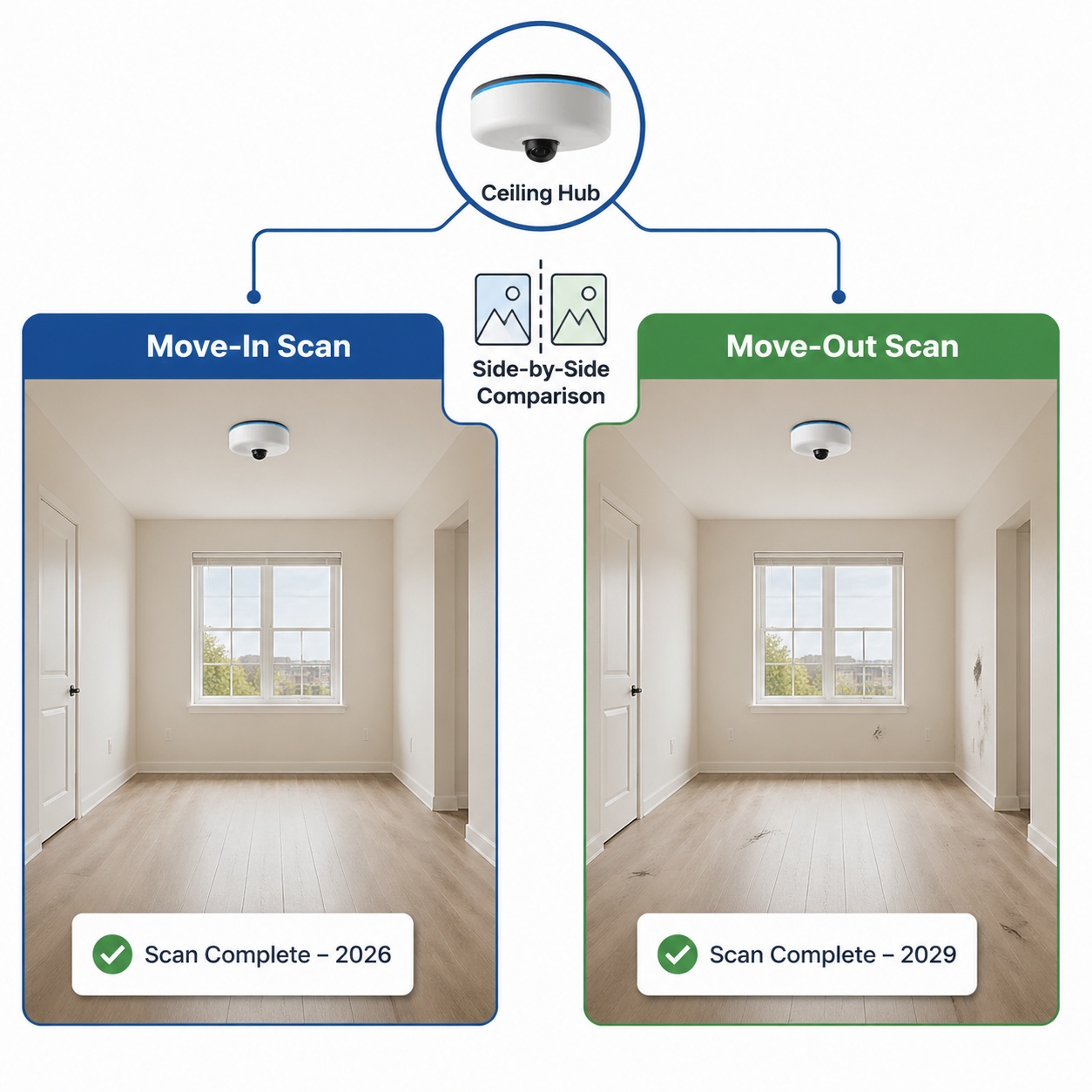 Move‑in:
Now imagine this running through a ceiling platform:
At move‑out, the exact same process runs again. Side‑by‑side comparison. No “he said, she said” on whether that smoke detector was hanging by a wire or whether the bathroom light was cracked.
During the lease:
[My Take]: The rental industry loses real money to security deposit disputes, incomplete maintenance records, and inconsistent documentation. A ceiling‑based platform that standardizes move‑in/move‑out scans and maintenance logs doesn’t just save time. It creates defensible records — in front of courts, arbitrators, and regulators.
That’s not “nice to have.” That’s a liability shield.
Regulators: what they’ve already seen
Before you write this off as sci‑fi, ask what regulators already know.
[Verified — CPSC, March 2024]: SKYX met with staff at the U.S. Consumer Product Safety Commission’s testing center to present its weight‑supporting ceiling receptacle and attachment system for fans and lights. They showed installation videos and told CPSC that using the receptacle makes installations less challenging and time‑consuming, reduces time on ladders, and provides more mechanically secure installs, reducing drop incidents. They also discussed reducing electrical hazards and offered fee‑free licensing of the technology.
SKYX backed its arguments with CPSC’s own NEISS injury data and tied them to a 2026 NEC proposal that would recognize these weight‑supporting ceiling platforms as acceptable methods. The core platform is already in the code, and the dialogue about safer ceiling infrastructure is ongoing.
Meanwhile, NEC 2026 development documents include proposals for “ceiling‑mounted multi‑function platforms” that explicitly contemplate ceiling‑mounted sensors, cameras, speakers, and other attachments.
In other words, the rulebook writers can see where this is headed. They’re already talking about ceilings that host much more than a basic junction box.
The Healthcare angle nobody’s talking about
If you’ve ever rented, you know this scene.
- A property manager with a clipboard
- Maybe a few photos
- “We’ll note that stain on the carpet.”
- Move‑out, three years later:
- Different manager
- Different phone
- Mixed records
- Disagreements over what was already damaged vs what’s new.
Now imagine this running through a ceiling platform:
- On move‑in, the manager opens the hub dashboard for Unit 247.
- The system runs a condition scan: fixture status, sensor readings, maybe images from integrated cameras where appropriate. Timestamped. Cloud‑stored.
- Tenant signs off digitally.
At move‑out, the exact same process runs again. Side‑by‑side comparison. No “he said, she said” on whether that smoke detector was hanging by a wire or whether the bathroom light was cracked.
During the lease:
- The resident says, “Schedule maintenance — the kitchen light is flickering.”
- The hub logs the request, identifies the exact device type and location, checks warranty status, and pushes the work order to the right queue.
- If it’s a plug‑and‑play SKYX fixture, the tech can swap it without opening a box or touching a wire-nut.
[My Take]: The rental industry loses real money to security deposit disputes, incomplete maintenance records, and inconsistent documentation. A ceiling‑based platform that standardizes move‑in/move‑out scans and maintenance logs doesn’t just save time. It creates defensible records — in front of courts, arbitrators, and regulators.
That’s not “nice to have.” That’s a liability shield.
Regulators: what they’ve already seen
Before you write this off as sci‑fi, ask what regulators already know.
[Verified — CPSC, March 2024]: SKYX met with staff at the U.S. Consumer Product Safety Commission’s testing center to present its weight‑supporting ceiling receptacle and attachment system for fans and lights. They showed installation videos and told CPSC that using the receptacle makes installations less challenging and time‑consuming, reduces time on ladders, and provides more mechanically secure installs, reducing drop incidents. They also discussed reducing electrical hazards and offered fee‑free licensing of the technology.
SKYX backed its arguments with CPSC’s own NEISS injury data and tied them to a 2026 NEC proposal that would recognize these weight‑supporting ceiling platforms as acceptable methods. The core platform is already in the code, and the dialogue about safer ceiling infrastructure is ongoing.
Meanwhile, NEC 2026 development documents include proposals for “ceiling‑mounted multi‑function platforms” that explicitly contemplate ceiling‑mounted sensors, cameras, speakers, and other attachments.
In other words, the rulebook writers can see where this is headed. They’re already talking about ceilings that host much more than a basic junction box.
The Healthcare angle nobody’s talking about
One last application before we zoom out: healthcare.
[Verified — SKYX/NVIDIA]: In SKYX’s AI collaboration announcement with NVIDIA’s Connect Program, they explicitly list fall detection and elderly monitoring as target applications for their AI‑enabled ceiling platform. The six intelligence domains include safety, behavioral, and predictive analytics — exactly what you need for automated fall detection and real‑time alerts.
[My Take]: Picture:
A senior‑care room where an 82‑year‑old falls at 2 a.m. In a traditional facility, they have to reach a wall button or a cord. If they can’t, nothing happens. In a ceiling‑equipped room, either the fall is detected automatically, or the resident simply says “help,” and the system routes the alert. No button to reach.
A hospital oncology unit where every switch, dial, and button is a potential infection vector. In a ceiling‑controlled room, you can go zero‑touch: voice lighting, voice temperature, voice nurse call. Less surface contact. Better infection control.
[Speculation]: No hospital or senior‑care system has publicly deployed SKYX yet. Clinical validation, regulatory approvals, and integration with medical systems take time. But the capabilities—fall detection, safety analytics, voice control—are already described in the NVIDIA collaboration. The need is obvious. The timing is uncertain.
[My Take]: What “ceiling apps” could look like
To make this less abstract, here are a few speculative “ceiling apps” that become thinkable once you have a standardized, smart, weight‑supporting ceiling interface everywhere:
UV‑C disinfection bots
A compact UV‑C module is docked in the ceiling. At 2 a.m., it descends to a fixed height over kitchen counters or bathroom surfaces, runs a timed UV cycle to reduce microbial load, then docks back up. Power, safety interlocks, and scheduling run through the SKYX hub.
Air‑quality sentinels
Ceiling modules continuously sampling air for particulates, VOCs, CO₂, or smoke. When thresholds are hit, they automatically adjust fans, notify occupants, or talk to building systems.
Dynamic safety signage
In hotels or dorms, ceiling devices that change color and arrows in real time during emergencies — literally lighting the path of egress based on which routes are safe.
Contextual projectors
Projectors that live in the ceiling and can drop instructions onto a counter (“recipe mode”), a workbench (“assembly mode”), or a hospital tray (“medication mode”), then retract and power down.
Ceiling‑rail logistics
Ceiling‑mounted rails that move lights, sensors, or small storage pods along tracks in tight spaces — reconfigurable rooms without moving furniture, controlled by the hub.
None of these are announced SKYX products today.
They’re examples of what becomes practical when the hard part — safe power, mechanical support, data, and control in the ceiling — is standardized and deployed at scale.
The ceiling as an operating system
Here’s the deeper point: none of these “apps” depends on all the others.
- A property manager could adopt automated move‑in/move‑out scans without voice AI.
- A developer could capture a utility truth package without offering smart leases.
- A healthcare operator could use fall detection without UV bots or projections.
- That’s what makes this an operating system, not a bundle.
Each integration stands alone. Each adds value on its own. But as you layer them together, the ceiling becomes the building’s central nervous system.
[Verified — SKYX Corporate Update]: SKYX’s own materials talk about revenue streams that go beyond hardware: product sales, royalties, licensing, subscription services, monitoring, and the sale of global rights. They expect to deploy over 100,000 products into homes and units by the end of 2026 and more than 1 million units across current projects over time.
[My Take]: Over 1 million installed units isn’t just a hardware number. It’s an installed base. Every unit is a potential node for voice AI, environmental sensing, safety monitoring, maintenance automation, or future third‑party apps — the way every smartphone became an App Store customer.
Cloud computing did this for servers. The App Store did it for mobile. Once the infrastructure became simple and consistent, ideas that used to be science fiction became businesses.
A standardized, AI‑enabled ceiling platform offers the same kind of springboard for everything that happens overhead.
Truth vs speculation
To keep our agreement:
Verified (from public sources):
SoundHound AI’s Amelia 7 agentic AI platform and its NVIDIA collaboration for in‑vehicle and device‑level voice AI.
Common Ground Alliance’s damage counts and ~$30B annual societal cost from underground utility strikes.
ProStar’s PointMan as an ASCE 38‑compliant subsurface utility mapping platform.
AMH’s 57k+ single‑family rentals and existing smart‑home/AI‑driven resident platform work.
Rental growth forecasts in the 2–3% range for 2026.
SKYX’s NVIDIA collaboration listing fall detection, elderly monitoring, and six intelligence domains.
SKYX’s stated revenue streams and 100k+/1M+ unit deployment expectations.
CPSC’s March 2024 meeting with SKYX and the NEISS‑backed 2026 NEC public input around safer ceiling installs.
NEC 2026 development work considering “ceiling‑mounted multi‑function platforms.”
My Take:
- The Building App Store as a mental model.
- The smart lease vs standard lease framework and rough economics.
- The move‑in/move‑out automation and liability logic.
- The healthcare and utility‑mapping use cases are natural next steps.
- The idea that 1M+ installed units should be valued as a platform base, not just a parts number.
Speculation:
- Any formal partnership between SKYX and SoundHound.
- Any formal partnership between SKYX and ProStar.
- Any build‑to‑rent operator actually offering a SKYX‑enabled smart lease tier today.
- Any hospital or senior‑care facility currently running SKYX for clinical use.
- The speed and shape of the “ceiling app” ecosystem and NEC’s final language.
What you can do right now
I’ll end this one with a simple ask:
Go into your kitchen. Your bedroom. Your office. Look up. Right now, you probably see a light, maybe a fan, maybe a smoke detector with a dead battery you’ve been ignoring.
Now picture that same ceiling:
- Listening when you say “lights,” “heat,” “help.”
- Mapping what’s underground outside your walls.
- Documenting its own condition at move‑in and move‑out.
- Scheduling its own maintenance.
- Hosting new services, you can add or remove them with a plug‑in, not a renovation.
That’s the Building App Store idea.
Not someday. The infrastructure is being installed now. The question is how fast the ecosystem catches up — and whether the market keeps pricing SKYX like a parts vendor while that happens.
Article 6 is next: we’ll break down the people building this platform — who they are, what they’ve done before, and why execution is ultimately a team sport.
← Previous in SKYX1-6 Series SeriesPart 4: SKYX Article 4: The World Gets It Before We DoNext in SKYX1-6 Series Series →Part 6: SKYX Article 6: The People, The Grind, and The Mispricing
Join The Wave
Get Early Access & Exclusive Intel
The Watchlist. Full deep-dives. Monthly Wave Room. Early video access. Everything serious impact investors need — before the crowd catches on.
Free. Unsubscribe anytime. By subscribing you agree to our Privacy Policy.