Back to Blog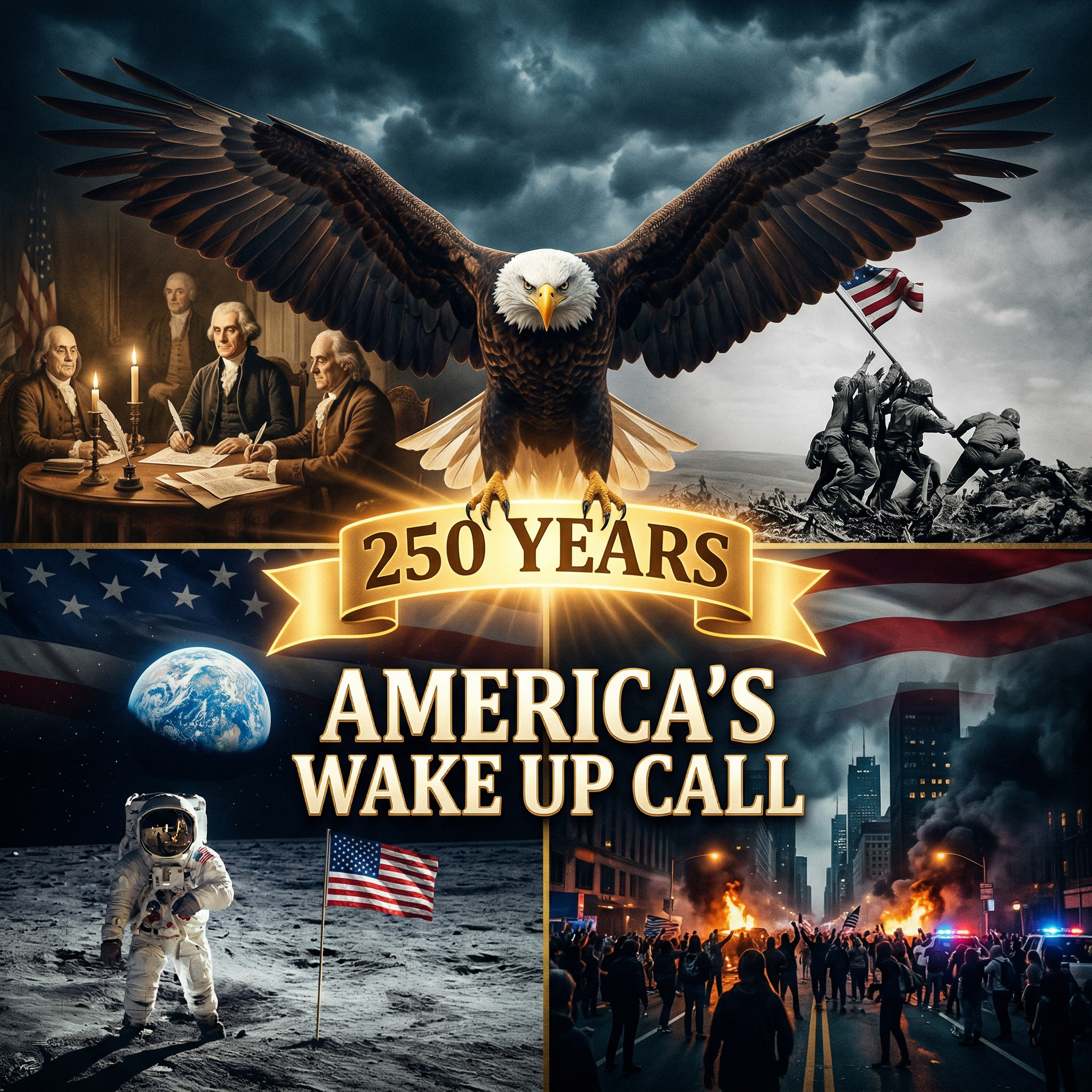
If this hit a nerve, share it—and tell me what you see as the biggest challenge for regular Americans right now. Drop a comment on the YouTube video or here on the site. I’m pulling real answers into the next articles and episodes.
Your part: help name the real problems
I don’t want this to be a sermon. I want it to be a huddle.
So before I start dropping the deeper pillars, I want to hear from you:
What’s the biggest challenge you see for yourself, your family, or your community right now?
Where do you feel the system is quietly rigged—work, schools, money, healthcare, housing, immigration, something else?
If you could fix one thing first, what would it be?
Drop your answer:
In the comments under this article
Under the YouTube video that launched with it
Or on whatever platform you saw this (LinkedIn, X, IG, Facebook, Substack)
I’ll be pulling real responses into future articles and videos so this becomes a shared blueprint, not just my rant.
We have the military strength, the Dreamer mentality, the generosity, and the melting pot of ideas to build something better than what we’re living right now.
The only question is whether we’re brave enough to tell the truth about what’s broken—and bold enough to fix it together.
America 2.0: Strong Shield, Big Dreams, Real Problems
We’re living in the most powerful, most connected, most confused America in history. We’ve got the strongest military on Earth, Dreamer DNA in our bones, legal immigrants bringing a melting pot of ideas and pain—and somehow the average person still feels like the game is rigged...
March 2, 2026-Video Interview
“This article launches a new series I’m calling America 2.0”?
We’re living in the most powerful, most connected, most confused America in history.
We’ve got the strongest military on Earth, Dreamer DNA in our bones, legal immigrants bringing a melting pot of ideas and pain—and somehow the average person still feels like the game is rigged and the future is shrinking.
This series is not another left‑vs‑right rant. It’s a builder’s blueprint: what’s broken, what still works, and what we can fix if we stop lying to ourselves.
The Pillars That Made America Exceptional
Here’s the backbone we thought we had—the pillars that made America different. The rest of this series is me pressure‑testing and rebuilding these for America 2.0.
Work as a Ladder
You could start near the bottom and climb if you showed up, worked hard, and stuck with it. A job wasn’t just a paycheck; it was a path.
Education as a Springboard
School was supposed to give you basic skills and a fair shot—whether you went to college or into a trade—so your future wasn’t locked in by your parents’ bank account.
Opportunity & Social Mobility
The American Dream: where you start doesn’t decide where you finish. If you took your shot, you could move up in status, income, and impact.
Truth, Skills & Systems
If you understood the rules—laws, markets, money, power—you could play the game, not just be played by it. Transparency and rule of law were part of the edge.
Ownership & Free‑Market Energy
Ordinary people could own a piece of the country—land, a small business, stocks—and free‑market energy rewarded solving real problems, not just being born into the right family.
Shared Story & Culture
A rough but powerful story: we’re flawed, we fight, but we believe in second chances, resilience, and “better today than yesterday” for the next generation.
Entrepreneur & Builder Mindset
From garages to farms to startups, America celebrated people who built—new products, new companies, new ideas—and let them fail, learn, and try again.
Melting Pot of Talent (Legal)
Legal immigration and a mix of cultures, beliefs, and scars gave us fresh eyes on old problems and a constant inflow of hungry talent.
Strong but Limited Government
Government set the rules of the game—rights, safety, basic infrastructure—without smothering individual drive, free speech, or private initiative.
Moral Compass, Generosity & Shield
America at its best gives big—at home and abroad—through private charity, disaster aid, and a military that can be a first responder when the world is on fire. But generosity without priorities and accountability turns into bad stewardship: crumbling bridges, veterans on concrete, and NGOs misusing millions in “humanitarian” dollars while calling it compassion.
In this series, I’m not throwing these pillars away. I’m asking: Where did we drift? What still works? And what do we have to rebuild for America 2.0 to be more than a slogan?
Strong shield, shaky house
On paper, America is still a superpower. Our military reach is unmatched, our tech is world‑class, and our economy still sets the tone for the planet. But a strong shield doesn’t fix a cracked foundation.
At home, regular people feel it:
The U.S. spends over a trillion dollars a year on means‑tested welfare, yet millions of jobs still sit empty and millions of people still feel stuck.
Kids graduate into a world of loans, credit, and AI with almost no real money training; national financial literacy sits around 49%.
Short‑form content—TikTok, Reels, Shorts—is literally training our brains for 8‑second attention spans and making deep focus harder.
We poured gasoline on the engine and forgot to check the frame.
A nation of Dreamers, legal aliens, and scars
America has always been a country of legal aliens and Dreamers—people who show up with an accent, a scar, and a wild belief that they can build something better here. That mix of cultures, pain, and perspective is our edge.
But we’ve stopped telling the full story.
Social media trains us to define people by one moment in time—one clip, one bad take, one accusation—and freeze them there forever.
The legal system still says “innocent until proven guilty,” but the online mob runs “guilty the second it trends.”
We preach “everyone’s a winner,” hand out participation trophies, and then watch people crumble at the first real loss.
Humans are supposed to live by a different rhythm:
We try. We fail. We learn. We try again.
Right now the rhythm is: we try, we fail… and we either get branded for life or we lie to protect our pride and ignore the lesson.
We used to have simple rituals that stitched us together: stand up, hand over heart, one nation under God, pledge in school, anthem at the ball game. You didn’t have to like every president or every policy to feel proud of the flag. Today, national pride is near record lows, and we spend more time arguing about whether we’re even allowed to say the pledge than we do living up to the words inside it. For me it’s simple: if you hate everything this country stands on, refuse to learn from or respect its past, and have zero interest in helping strengthen the bond between us now and into the future, this probably isn’t your home. America is not perfect—but it’s a team. If you’re here, you don’t have to agree on every play, but you do have to love the jersey enough to fight for it.
The tools got smarter. Did we?
Here’s the crazy part: we’re living in the best and worst learning moment in human history.
If you really want to learn, you can teach yourself almost anything from your phone—money skills, coding, trades, business, languages, you name it.
At the same time, endless short‑form scroll is melting focus and making it harder to stick with books, longform, or hard problems.
We should have mini Einsteins everywhere. Instead we have TikTok brain.
The tools got smarter. Now it’s on us—and our culture—to make our curiosity and attention catch up.
Work, money, and a rigged‑feeling game
Under the surface, there’s a pattern:
We spend over $1 trillion a year on welfare and lose another ~$160 billion in output from unfilled jobs—yet we don’t build a clean bridge from “on support” to “fully trained, fully hired.”
We launch Trump Accounts that put $1,000 into an investment account for millions of newborns, but most parents and kids have never been taught how any of this really works.
Federal lobbying hits record highs—over $4.4 billion in 2024—shaping the rules of the game while regular people are still trying to read the rulebook.
Migrant‑related NGOs receive billions in taxpayer funds, yet audits and grand jury reports are finding millions in misused or undocumented spending and organizations that look more like pipelines and payroll machines than true humanitarian partners.
So yeah, it feels rigged. Because in many ways, it is.
Where this series is going
This first article is just the invite. Here’s where we’re headed next:
Work & Wages – Is hard work still a ladder, or just a treadmill in an AI age?
Education & Opportunity – Why we spend over a trillion on welfare and still leave people stuck—and how to turn welfare into a launchpad, not a life sentence.
Truth, Skills & Systems – What school never taught you about banks, cash withdrawals, debt, TikTok brain, and how systems actually work.
Ownership, Not Orphaned Accounts – Trump Accounts, small‑cap innovation, and how to raise owners instead of spectators.
Shared Story & Culture – Winners and losers, leaves/branches/roots, social media mobs, pride, and real forgiveness.
Each pillar will follow a simple pattern:
Then – the story we thought we were living.
Now – what’s actually happening.
Fix – what a sane, grown‑up country could choose to do next.
We’ve got the strongest military on Earth, Dreamer DNA in our bones, legal immigrants bringing a melting pot of ideas and pain—and somehow the average person still feels like the game is rigged and the future is shrinking.
This series is not another left‑vs‑right rant. It’s a builder’s blueprint: what’s broken, what still works, and what we can fix if we stop lying to ourselves.
The Pillars That Made America Exceptional
Here’s the backbone we thought we had—the pillars that made America different. The rest of this series is me pressure‑testing and rebuilding these for America 2.0.
Work as a Ladder
You could start near the bottom and climb if you showed up, worked hard, and stuck with it. A job wasn’t just a paycheck; it was a path.
Education as a Springboard
School was supposed to give you basic skills and a fair shot—whether you went to college or into a trade—so your future wasn’t locked in by your parents’ bank account.
Opportunity & Social Mobility
The American Dream: where you start doesn’t decide where you finish. If you took your shot, you could move up in status, income, and impact.
Truth, Skills & Systems
If you understood the rules—laws, markets, money, power—you could play the game, not just be played by it. Transparency and rule of law were part of the edge.
Ownership & Free‑Market Energy
Ordinary people could own a piece of the country—land, a small business, stocks—and free‑market energy rewarded solving real problems, not just being born into the right family.
Shared Story & Culture
A rough but powerful story: we’re flawed, we fight, but we believe in second chances, resilience, and “better today than yesterday” for the next generation.
Entrepreneur & Builder Mindset
From garages to farms to startups, America celebrated people who built—new products, new companies, new ideas—and let them fail, learn, and try again.
Melting Pot of Talent (Legal)
Legal immigration and a mix of cultures, beliefs, and scars gave us fresh eyes on old problems and a constant inflow of hungry talent.
Strong but Limited Government
Government set the rules of the game—rights, safety, basic infrastructure—without smothering individual drive, free speech, or private initiative.
Moral Compass, Generosity & Shield
America at its best gives big—at home and abroad—through private charity, disaster aid, and a military that can be a first responder when the world is on fire. But generosity without priorities and accountability turns into bad stewardship: crumbling bridges, veterans on concrete, and NGOs misusing millions in “humanitarian” dollars while calling it compassion.
In this series, I’m not throwing these pillars away. I’m asking: Where did we drift? What still works? And what do we have to rebuild for America 2.0 to be more than a slogan?
Strong shield, shaky house
On paper, America is still a superpower. Our military reach is unmatched, our tech is world‑class, and our economy still sets the tone for the planet. But a strong shield doesn’t fix a cracked foundation.
At home, regular people feel it:
The U.S. spends over a trillion dollars a year on means‑tested welfare, yet millions of jobs still sit empty and millions of people still feel stuck.
Kids graduate into a world of loans, credit, and AI with almost no real money training; national financial literacy sits around 49%.
Short‑form content—TikTok, Reels, Shorts—is literally training our brains for 8‑second attention spans and making deep focus harder.
We poured gasoline on the engine and forgot to check the frame.
A nation of Dreamers, legal aliens, and scars
America has always been a country of legal aliens and Dreamers—people who show up with an accent, a scar, and a wild belief that they can build something better here. That mix of cultures, pain, and perspective is our edge.
But we’ve stopped telling the full story.
Social media trains us to define people by one moment in time—one clip, one bad take, one accusation—and freeze them there forever.
The legal system still says “innocent until proven guilty,” but the online mob runs “guilty the second it trends.”
We preach “everyone’s a winner,” hand out participation trophies, and then watch people crumble at the first real loss.
Humans are supposed to live by a different rhythm:
We try. We fail. We learn. We try again.
Right now the rhythm is: we try, we fail… and we either get branded for life or we lie to protect our pride and ignore the lesson.
We used to have simple rituals that stitched us together: stand up, hand over heart, one nation under God, pledge in school, anthem at the ball game. You didn’t have to like every president or every policy to feel proud of the flag. Today, national pride is near record lows, and we spend more time arguing about whether we’re even allowed to say the pledge than we do living up to the words inside it. For me it’s simple: if you hate everything this country stands on, refuse to learn from or respect its past, and have zero interest in helping strengthen the bond between us now and into the future, this probably isn’t your home. America is not perfect—but it’s a team. If you’re here, you don’t have to agree on every play, but you do have to love the jersey enough to fight for it.
The tools got smarter. Did we?
Here’s the crazy part: we’re living in the best and worst learning moment in human history.
If you really want to learn, you can teach yourself almost anything from your phone—money skills, coding, trades, business, languages, you name it.
At the same time, endless short‑form scroll is melting focus and making it harder to stick with books, longform, or hard problems.
We should have mini Einsteins everywhere. Instead we have TikTok brain.
The tools got smarter. Now it’s on us—and our culture—to make our curiosity and attention catch up.
Work, money, and a rigged‑feeling game
Under the surface, there’s a pattern:
We spend over $1 trillion a year on welfare and lose another ~$160 billion in output from unfilled jobs—yet we don’t build a clean bridge from “on support” to “fully trained, fully hired.”
We launch Trump Accounts that put $1,000 into an investment account for millions of newborns, but most parents and kids have never been taught how any of this really works.
Federal lobbying hits record highs—over $4.4 billion in 2024—shaping the rules of the game while regular people are still trying to read the rulebook.
Migrant‑related NGOs receive billions in taxpayer funds, yet audits and grand jury reports are finding millions in misused or undocumented spending and organizations that look more like pipelines and payroll machines than true humanitarian partners.
So yeah, it feels rigged. Because in many ways, it is.
Where this series is going
This first article is just the invite. Here’s where we’re headed next:
Work & Wages – Is hard work still a ladder, or just a treadmill in an AI age?
Education & Opportunity – Why we spend over a trillion on welfare and still leave people stuck—and how to turn welfare into a launchpad, not a life sentence.
Truth, Skills & Systems – What school never taught you about banks, cash withdrawals, debt, TikTok brain, and how systems actually work.
Ownership, Not Orphaned Accounts – Trump Accounts, small‑cap innovation, and how to raise owners instead of spectators.
Shared Story & Culture – Winners and losers, leaves/branches/roots, social media mobs, pride, and real forgiveness.
Each pillar will follow a simple pattern:
Then – the story we thought we were living.
Now – what’s actually happening.
Fix – what a sane, grown‑up country could choose to do next.
If this hit a nerve, share it—and tell me what you see as the biggest challenge for regular Americans right now. Drop a comment on the YouTube video or here on the site. I’m pulling real answers into the next articles and episodes.
Your part: help name the real problems
I don’t want this to be a sermon. I want it to be a huddle.
So before I start dropping the deeper pillars, I want to hear from you:
What’s the biggest challenge you see for yourself, your family, or your community right now?
Where do you feel the system is quietly rigged—work, schools, money, healthcare, housing, immigration, something else?
If you could fix one thing first, what would it be?
Drop your answer:
In the comments under this article
Under the YouTube video that launched with it
Or on whatever platform you saw this (LinkedIn, X, IG, Facebook, Substack)
I’ll be pulling real responses into future articles and videos so this becomes a shared blueprint, not just my rant.
Because for all our mess, I still believe this:
We have the military strength, the Dreamer mentality, the generosity, and the melting pot of ideas to build something better than what we’re living right now.
The only question is whether we’re brave enough to tell the truth about what’s broken—and bold enough to fix it together.
Join The Wave
Get Early Access & Exclusive Intel
The Watchlist. Full deep-dives. Monthly Wave Room. Early video access. Everything serious impact investors need — before the crowd catches on.
Free. Unsubscribe anytime. By subscribing you agree to our Privacy Policy.