Back to Blog
Website: https://www.skyxplatforms.com/
Market: The global smart home market is projected to surpass $200 billion by 2030, and construction markets add hundreds of billions more.
Problem: Traditional ceiling fixtures and fans are still installed by wiring on ladders—slow, costly, and risky for shocks, falls, and fires.
Solution: SKYX’s patented plug‑and‑play ceiling platform lets fixtures and ceiling fans snap into a standardized receptacle, making installs faster, safer, and easier, with the potential to save substantial labor costs and reduce injuries and electrical hazards across millions of installs. In addition, SKYX’s all‑seasons SkyFan & Turbo Heater combines a ceiling fan with an integrated ceramic heater, delivering cool airflow in summer and targeted warmth in winter as a safer, more efficient alternative to traditional portable space heaters.
3. Daxor Corporation
Market: Heart‑failure and critical‑care volume management is a multi‑billion‑dollar need in a healthcare system under cost and outcome pressure.
Problem: Guessing fluid status leads to more deaths, longer hospital stays, and higher readmissions.
Solution: Daxor’s BVA‑100 directly measures blood volume; BVA‑guided care has cut length of stay by about 55% and reduced readmissions and mortality in heart‑failure studies.
Why this matters: Better fluid decisions at the bedside can save lives, free hospital capacity, and take real pressure off patients, families, and payers.
4. Research Frontiers – SPD‑SmartGlass Website:https://www.smartglass.com/
Market: Dynamic glass and building energy efficiency sit on top of hundreds of billions in annual global energy spend.
Problem: Inefficient windows drive up cooling loads, emissions, and discomfort in glass‑heavy buildings.
Solution: SPD‑SmartGlass tints on demand, slashing solar heat gain by up to about 90% in testing and improving comfort while cutting HVAC demand.
Why this matters: If widely adopted, this tech can turn windows into active climate tools—lowering bills, emissions, and glare in everything from offices to vehicles.
5. Data I/O Corporation
Website: https://www.dataio.com/ https://www.dataio.com/
Market: Secure programming and hardware security underpin huge markets in automotive, industrial, IoT, medical, and consumer electronics.
Problem: Programming chips and injecting security at scale is complex; mistakes lead to insecure devices and exposed IP.
Solution: Data I/O’s systems and SentriX platform let manufacturers program and securely provision chips during production with keys, IDs, and security profiles.
Why this matters: Trusted hardware is the foundation for safe connected cars, factories, and devices—Data I/O helps lock that in at the factory before products ever ship
6. Xtract One Technologies  Website:https://xtractone.com/
Problem: Old‑school metal detectors are slow, intrusive, staff‑heavy, and still miss some threats.
Solution: Xtract One’s AI‑powered gateways let people walk naturally while scanning for weapons, separating benign objects from real threats.
Why this matters: Smarter screening means safer spaces without turning every entrance into a half‑hour line and a bad experience.
Problem: Chronic inflammation and immune imbalance drive disease, while many current drugs only manage symptoms.
Solution: Coya is developing Treg‑focused therapies like COYA 302, now cleared by FDA for Phase 2 ALS trials, aiming to restore immune balance and reduce neuroinflammation.
Why this matters: If successful, these therapies could shift some of the most devastating diagnoses from “manage and decline” toward real disease‑modification.
Market: Graphene and advanced nanomaterials are set to impact composites, coatings, energy storage, electronics, and environmental cleanup.
Problem: Graphene has been held back by cost, inconsistent quality, and dirty or unscalable production.
Solution: HydroGraph’s Hyperion process makes ultra‑pure, few‑layer graphene in a modular, lower‑energy way; studies show it can remove 100% of certain toxic dyes from water and be reused across multiple cycles. 200 X Stronger than steel, harder than diamonds, translucent, one thousand times more conductive than copper, flexible. This material could make it so we would not need to use as much critical minerals to get as good as if not superior performance results. 100 Percent S-2 bonding and 100 percent crystalline and 99.8 purity level with third party verification to be able to scale and maintain the purity level. Which up until now has not been possible on a consistent basis.
Why this matters: High‑quality, scalable graphene unlocks lighter, stronger materials and cleaner water—and can turn graphene from hype into practical impact.

Website: https://www.unusualmachines.com
Market: Defense, public safety, logistics, inspection, agriculture, and FPV all depend on trusted drone tech in a fast‑growing global market.
Problem: Heavy dependence on foreign drone components raises security, regulatory, and supply‑chain risks for critical missions.
Solution: Unusual Machines builds U.S.‑made, NDAA‑compliant drone parts and FPV systems through brands like Fat Shark and Rotor Riot, with several components approved for the U.S. Blue UAS ecosystem.
Why this matters: A domestic, compliant parts supplier helps keep key drone applications—like school safety, inspection, and defense—secure, resilient, and less dependent on overseas sources.
Products and services that:
If they crack a billion-dollar problem, they can become a billion-dollar company. The market cap becomes the scoreboard for real-world impact.
Why I promote what I own for free
If I’m part owner of a company that:
…why would I stay quiet?
I’ll talk about them.
I’ll interview the CEO.
I’ll educate the market on the problem they’re solving.
I’ll challenge them publicly and privately when they drift from mission or get sloppy with capital.
Silence is not “neutral.”
If I believe a company can make the world even a little bit better, I want my fingerprint on that change. Not because of ego, not because of wealth. because at when I check out of this world I want to know in my own mind that I truly did everything I could to make it beet while I was here.
Guardrails: Zero hype, high ethics
No hidden intent
I’ll say it. I’ll protect my audience, not the narrative.
I don’t chase narratives — I follow truth and performance.
If a company’s story starts to drift from reality, I move on. No drama, no public bashing. I quietly sell my position and stop coverage. My focus is progress, not noise.
For Alpha Wolf members — whether you’re part of the free list or the paying community — you’ll always be notified if I stop covering a company. I’ll keep it short and clear: I’ve sold, or I plan to sell. No speculation, no gossip. Just clean exits and forward motion.
If the answer is yes, then I’m not just buying a stock.
I’m buying a story I’d be proud to tell my future self:
“I was part owner of that company when they were tiny—before they helped change an industry.”
That is something I can feel good about. When my ticket gets punched. I would like my last thought to be I made a difference. I am leaving this place in a better position than when I entered it.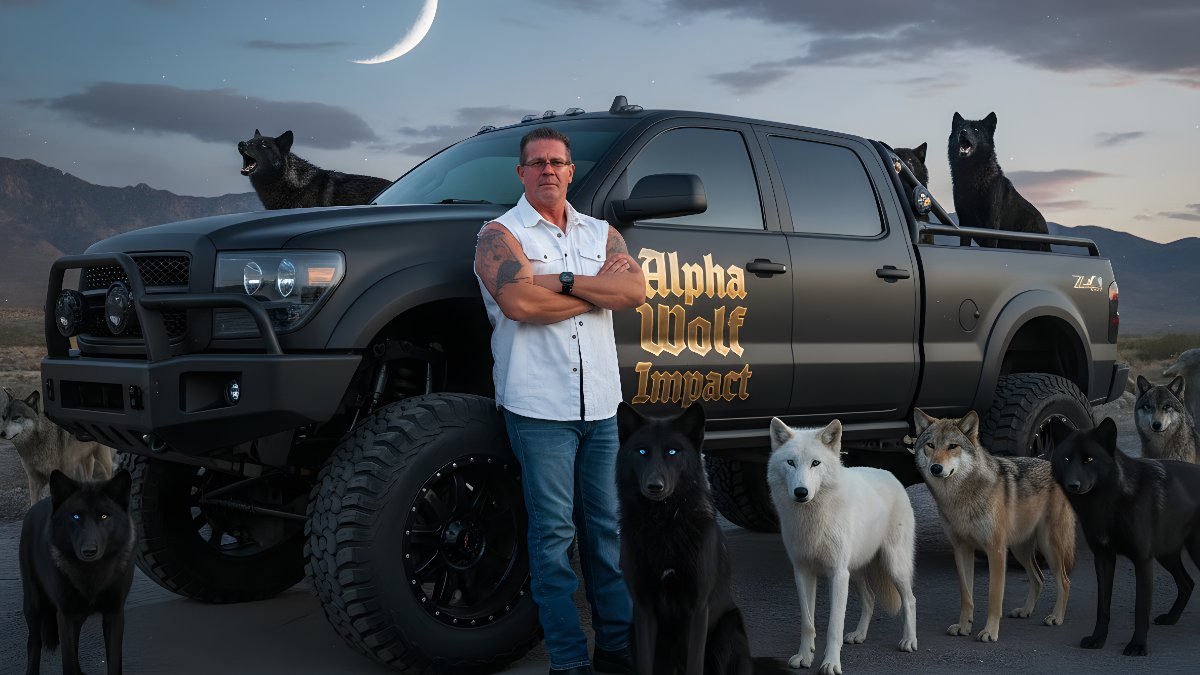
The Next Generation of Innovation: Ten Companies Quietly Reshaping Our Future
February 14, 2026
Quiet builders, real impact
Amid the noise around giant corporations and global brands, real change is often built quietly—by small businesses and startups working on the problems that actually hit home.
Alpha Wolf Impact is shining a spotlight on ten such companies. Each one is tackling a real‑world problem with a solution that could reshape an industry and make everyday life safer, cleaner, or more efficient.
This article is a small sample of early‑stage teams I know personally—builders solving problems the world actually has. They’re still early. They still need awareness, adoption, and fair access to capital to reach their potential. More people need to understand what they do and why they matter.
As you read, don’t just think about your portfolio. Think about someone you love facing one of these problems. Ask yourself:
Now zoom out.
Imagine a focused community of people who understand how important these companies are—and decide to help them. We:
We also need something simple but rare in Washington: the ability to pass a single, common‑sense bill on a single issue—without loading it up with a thousand unrelated items just to get one logical solution, idea, or innovation across the finish line.
Many people complain that big companies keep getting bigger, but we don’t do enough to help small companies survive a system that’s stacked against them. Exchanges quietly raise bars that squeeze early‑stage innovators. “Partners” show up smiling, then bring toxic financing, death‑spiral converts, predatory warrants, and structures that reward driving a stock into the ground instead of helping a company succeed.
It’s expensive for a small company to list on a major exchange, and Wall Street seems to forget where today’s mega‑caps came from. They didn’t start as giants. They started as tiny, risky, under‑funded teams—today’s microcaps. Yet the exchanges make it harder to go public, harder to stay public, and easier for bad actors to exploit the rules.
There is a whole playbook of games in the public markets. Certain players know exactly where they can bend the standards in their favor to crush a microcap simply because they can. They know small caps will eventually need financing. They know the odds are stacked against these companies. They know most leadership teams are not capital‑markets experts. They know how to create fear with retail investors who are often trading on emotion, not deep research.
That fear becomes fuel—for toxic financings, naked short selling, manufactured sell‑offs, and a steady drip of doubt. The vultures and predators manipulate the market and capitalize on fear, complexity, and inexperience. They do not care what the company does, how many people it helps, or whether it lives or dies. They care about fees and short‑term profits.
A painful truth: a high percentage of small companies disappear within a few years of going public, and new listing and compliance rules at some exchanges will likely push that number even higher. We’re building a system that makes it harder for innovators to survive and easier for financial engineers to feed on them.
We need a massive pack of wolves that can sniff out the companies truly making the world better. A group of “Alphas” who understand what that word really means.
Because in a wolf pack, an alpha isn’t a bully. The alpha is often the parent or parents—the leaders who guide by example, not intimidation. They protect the pack. They scout for danger. They secure food and safety. They are loyal.
That’s the spirit Alpha Wolf Impact is built on: a community of informed, aligned “alphas” who protect the builders, challenge the predators, and help important innovations become impossible to ignore.
They raise money when they’re desperate instead of when they’re strong. They underestimate how much capital they really need. They sign terms that give toxic lenders the tools to dilute them into oblivion—while those same players short the stock and blame “the market.”
This is where a coordinated, informed community can flip the script.
I hear retail shareholders blasting CEOs over a collapsing share price, not realizing that many founders are more invested than anyone and are fighting to keep the lights on. The “system” they were told would help them grow turns out to be a maze of conflicts, gatekeepers, and gotchas.
But when your only options come with toxic terms, the choice often becomes: sign the deal…or shut the doors. Yes, leadership should learn the game earlier. But many are wined and dined into going public too soon, under the illusion that institutional capital will show up. The reality: most small and microcaps are simply too small for billion‑dollar funds to care. They can’t deploy enough capital for the returns to move the needle.
If we do this right, more of these builders reach self‑sustainability. Some won’t just survive—they’ll become the standard. They’ll save lives, protect workers, clean the environment, lower costs, and inspire the next wave of founders to build the right way.
The ripple effects are hard to measure—but they’re very real.
And yes, in that world, the toxic financers, chronic naked shorters, and loan‑shark structures that prey on small caps start taking the losses they’ve been handing everyone else. That’s a storm I’m more than happy to help create.
I’m just one person—a small ripple. But I’m looking for the other wolves.
The ones who love this country and love people more than party, label, or category. The ones who see through the noise and refuse to be sheep. The ones who recognize the chance to be part of something that makes the world a little better—and maybe makes them wealthier in two ways: spiritually and financially.
By joining together—positive‑minded, morally grounded, brilliant, compassionate, and humble alphas—we can build a pack that:
That’s the invite.
If this resonates, you’re not just reading this movement—you’re meant to be part of it.
That’s what this movement is about: not just spotting hidden innovators, but helping them become impossible to ignore.
Amid the noise around giant corporations and global brands, real change is often built quietly—by small businesses and startups working on the problems that actually hit home.
Alpha Wolf Impact is shining a spotlight on ten such companies. Each one is tackling a real‑world problem with a solution that could reshape an industry and make everyday life safer, cleaner, or more efficient.
This article is a small sample of early‑stage teams I know personally—builders solving problems the world actually has. They’re still early. They still need awareness, adoption, and fair access to capital to reach their potential. More people need to understand what they do and why they matter.
As you read, don’t just think about your portfolio. Think about someone you love facing one of these problems. Ask yourself:
- Does this solution make common sense?
- Why isn’t this already the standard?
- Would the world be even a little better if it was?
- How many lives could it touch? How much time, money, and pain could it save?
- Would it make workers safer, communities stronger, or insurance premiums lower over time?
Now zoom out.
Imagine a focused community of people who understand how important these companies are—and decide to help them. We:
- Spread the word so industries can’t ignore common‑sense solutions.
- Ask city, state, and federal leaders: “Why aren’t we using this already?”
- Open our networks to people who can create real synergy with these companies: potential partners, customers, or brand ambassadors who see the value and understand why it matters that these teams succeed. Maybe the solution isn’t for us directly. Maybe it serves people we’ll never meet—patients living with specific diseases, workers in dangerous environments, communities drinking contaminated water, or industries stuck in outdated, inefficient systems. We know there are large groups of people who are under‑diagnosed, under‑protected, or under‑served by the tools we already have.
- Push for smarter policies that back real innovators instead of suffocating them with red tape or starving them of capital.
We also need something simple but rare in Washington: the ability to pass a single, common‑sense bill on a single issue—without loading it up with a thousand unrelated items just to get one logical solution, idea, or innovation across the finish line.
Many people complain that big companies keep getting bigger, but we don’t do enough to help small companies survive a system that’s stacked against them. Exchanges quietly raise bars that squeeze early‑stage innovators. “Partners” show up smiling, then bring toxic financing, death‑spiral converts, predatory warrants, and structures that reward driving a stock into the ground instead of helping a company succeed.
It’s expensive for a small company to list on a major exchange, and Wall Street seems to forget where today’s mega‑caps came from. They didn’t start as giants. They started as tiny, risky, under‑funded teams—today’s microcaps. Yet the exchanges make it harder to go public, harder to stay public, and easier for bad actors to exploit the rules.
There is a whole playbook of games in the public markets. Certain players know exactly where they can bend the standards in their favor to crush a microcap simply because they can. They know small caps will eventually need financing. They know the odds are stacked against these companies. They know most leadership teams are not capital‑markets experts. They know how to create fear with retail investors who are often trading on emotion, not deep research.
That fear becomes fuel—for toxic financings, naked short selling, manufactured sell‑offs, and a steady drip of doubt. The vultures and predators manipulate the market and capitalize on fear, complexity, and inexperience. They do not care what the company does, how many people it helps, or whether it lives or dies. They care about fees and short‑term profits.
A painful truth: a high percentage of small companies disappear within a few years of going public, and new listing and compliance rules at some exchanges will likely push that number even higher. We’re building a system that makes it harder for innovators to survive and easier for financial engineers to feed on them.
We need a different kind of system—one that:
- Encourages innovation and ingenuity instead of punishing it.
- Mentors under‑informed and under‑educated investors and founders instead of exploiting them.
- Gives small companies a fair shot at accessing capital without signing away their future.
We need a massive pack of wolves that can sniff out the companies truly making the world better. A group of “Alphas” who understand what that word really means.
Because in a wolf pack, an alpha isn’t a bully. The alpha is often the parent or parents—the leaders who guide by example, not intimidation. They protect the pack. They scout for danger. They secure food and safety. They are loyal.
That’s the spirit Alpha Wolf Impact is built on: a community of informed, aligned “alphas” who protect the builders, challenge the predators, and help important innovations become impossible to ignore.
Most small companies don’t learn this playbook until it’s too late.
They raise money when they’re desperate instead of when they’re strong. They underestimate how much capital they really need. They sign terms that give toxic lenders the tools to dilute them into oblivion—while those same players short the stock and blame “the market.”
This is where a coordinated, informed community can flip the script.
I hear retail shareholders blasting CEOs over a collapsing share price, not realizing that many founders are more invested than anyone and are fighting to keep the lights on. The “system” they were told would help them grow turns out to be a maze of conflicts, gatekeepers, and gotchas.
Small companies need capital to:
- Survive the adoption curve
- Fund R&D and real‑world case studies
- Market their solutions
- Hire the team that can actually execute the vision
But when your only options come with toxic terms, the choice often becomes: sign the deal…or shut the doors. Yes, leadership should learn the game earlier. But many are wined and dined into going public too soon, under the illusion that institutional capital will show up. The reality: most small and microcaps are simply too small for billion‑dollar funds to care. They can’t deploy enough capital for the returns to move the needle.
So what can we do?
- Help founders think long‑term about capital so they’re less exposed to predatory terms.
- Track patterns in how certain funds and structures show up again and again—and call them out.
- Support companies that choose cleaner, shareholder‑aligned financing and real value creation over quick, dirty cash.
If we do this right, more of these builders reach self‑sustainability. Some won’t just survive—they’ll become the standard. They’ll save lives, protect workers, clean the environment, lower costs, and inspire the next wave of founders to build the right way.
The ripple effects are hard to measure—but they’re very real.
And yes, in that world, the toxic financers, chronic naked shorters, and loan‑shark structures that prey on small caps start taking the losses they’ve been handing everyone else. That’s a storm I’m more than happy to help create.
I’m just one person—a small ripple. But I’m looking for the other wolves.
The ones who love this country and love people more than party, label, or category. The ones who see through the noise and refuse to be sheep. The ones who recognize the chance to be part of something that makes the world a little better—and maybe makes them wealthier in two ways: spiritually and financially.
By joining together—positive‑minded, morally grounded, brilliant, compassionate, and humble alphas—we can build a pack that:
- Does the right thing, even when it’s hard.
- Makes more people aware of real solutions that deserve a shot.
- Shrinks the adoption curve for innovations that can save time, money, and lives.
That’s the invite.
If this resonates, you’re not just reading this movement—you’re meant to be part of it.
That’s what this movement is about: not just spotting hidden innovators, but helping them become impossible to ignore.
1. ProStar Holdings – PointMan  Website: https://pointman.com/
Website: https://pointman.com/
Market: U.S. infrastructure and construction over 2 trillion dollars annually; utility strikes cost tens of billions per year.
Problem: Striking buried utilities leads to explosions, injuries, deaths, and brutal delays.
Solution: PointMan maps underground utilities with high‑accuracy GPS/GNSS on a phone or tablet, and has cut strikes by over 90% in real‑world projects.
Why this matters: Every avoided strike protects workers, communities, and budgets—and the more projects that use PointMan, the safer and cheaper modern infrastructure becomes.
2. SKYX Platforms
Market: U.S. infrastructure and construction over 2 trillion dollars annually; utility strikes cost tens of billions per year.
Problem: Striking buried utilities leads to explosions, injuries, deaths, and brutal delays.
Solution: PointMan maps underground utilities with high‑accuracy GPS/GNSS on a phone or tablet, and has cut strikes by over 90% in real‑world projects.
Why this matters: Every avoided strike protects workers, communities, and budgets—and the more projects that use PointMan, the safer and cheaper modern infrastructure becomes.
2. SKYX Platforms
Website: https://www.skyxplatforms.com/
Market: The global smart home market is projected to surpass $200 billion by 2030, and construction markets add hundreds of billions more.
Problem: Traditional ceiling fixtures and fans are still installed by wiring on ladders—slow, costly, and risky for shocks, falls, and fires.
Solution: SKYX’s patented plug‑and‑play ceiling platform lets fixtures and ceiling fans snap into a standardized receptacle, making installs faster, safer, and easier, with the potential to save substantial labor costs and reduce injuries and electrical hazards across millions of installs. In addition, SKYX’s all‑seasons SkyFan & Turbo Heater combines a ceiling fan with an integrated ceramic heater, delivering cool airflow in summer and targeted warmth in winter as a safer, more efficient alternative to traditional portable space heaters.
Why this matters: Standardizing the ceiling connection could quietly become the norm in new builds and retrofits—saving time, reducing injuries, and creating a backbone for smarter, safer homes and buildings
3. Daxor Corporation
Website: https://daxor.com/
Market: Heart‑failure and critical‑care volume management is a multi‑billion‑dollar need in a healthcare system under cost and outcome pressure.
Problem: Guessing fluid status leads to more deaths, longer hospital stays, and higher readmissions.
Solution: Daxor’s BVA‑100 directly measures blood volume; BVA‑guided care has cut length of stay by about 55% and reduced readmissions and mortality in heart‑failure studies.
Why this matters: Better fluid decisions at the bedside can save lives, free hospital capacity, and take real pressure off patients, families, and payers.
4. Research Frontiers – SPD‑SmartGlass
Website:https://www.smartglass.com/ Market: Dynamic glass and building energy efficiency sit on top of hundreds of billions in annual global energy spend.
Problem: Inefficient windows drive up cooling loads, emissions, and discomfort in glass‑heavy buildings.
Solution: SPD‑SmartGlass tints on demand, slashing solar heat gain by up to about 90% in testing and improving comfort while cutting HVAC demand.
Why this matters: If widely adopted, this tech can turn windows into active climate tools—lowering bills, emissions, and glare in everything from offices to vehicles.
5. Data I/O Corporation
Website: https://www.dataio.com/ https://www.dataio.com/
Market: Secure programming and hardware security underpin huge markets in automotive, industrial, IoT, medical, and consumer electronics.
Problem: Programming chips and injecting security at scale is complex; mistakes lead to insecure devices and exposed IP.
Solution: Data I/O’s systems and SentriX platform let manufacturers program and securely provision chips during production with keys, IDs, and security profiles.
Why this matters: Trusted hardware is the foundation for safe connected cars, factories, and devices—Data I/O helps lock that in at the factory before products ever ship
6. Xtract One Technologies
Website:https://xtractone.com/ Market: Physical security for venues, schools, workplaces, and critical sites is a 100‑billion‑plus global spend.
Problem: Old‑school metal detectors are slow, intrusive, staff‑heavy, and still miss some threats.
Solution: Xtract One’s AI‑powered gateways let people walk naturally while scanning for weapons, separating benign objects from real threats.
Why this matters: Smarter screening means safer spaces without turning every entrance into a half‑hour line and a bad experience.
7. Duos Technologies – Edge AI Data Centers
 Website: https://www.duostechnologies.com
Market: Edge computing and local AI infrastructure are rapidly growing as data and applications move closer to users.
Problem: Centralized data centers alone can’t deliver the low latency and resilience needed for many modern, distributed applications.
Solution: Duos Edge AI deploys modular edge data centers near end users, providing robust local compute and storage with fast deployment.
Why this matters: Robust local infrastructure is how small cities, schools, and businesses tap into advanced digital services without waiting for big tech to build next door.
Website: https://www.duostechnologies.com
Market: Edge computing and local AI infrastructure are rapidly growing as data and applications move closer to users.
Problem: Centralized data centers alone can’t deliver the low latency and resilience needed for many modern, distributed applications.
Solution: Duos Edge AI deploys modular edge data centers near end users, providing robust local compute and storage with fast deployment.
Why this matters: Robust local infrastructure is how small cities, schools, and businesses tap into advanced digital services without waiting for big tech to build next door.
8. Coya Therapeutics
 Website:
 8. Coya Therapeutics
Market: ALS, FTD, Parkinson’s, Alzheimer’s, and related autoimmune/inflammatory diseases represent massive unmet‑need markets with limited effective options.
Problem: Chronic inflammation and immune imbalance drive disease, while many current drugs only manage symptoms.
Solution: Coya is developing Treg‑focused therapies like COYA 302, now cleared by FDA for Phase 2 ALS trials, aiming to restore immune balance and reduce neuroinflammation.
Why this matters: If successful, these therapies could shift some of the most devastating diagnoses from “manage and decline” toward real disease‑modification.
9. HydroGraph Clean Power
Website: https://hydrograph.com
Market: Graphene and advanced nanomaterials are set to impact composites, coatings, energy storage, electronics, and environmental cleanup.
Problem: Graphene has been held back by cost, inconsistent quality, and dirty or unscalable production.
Solution: HydroGraph’s Hyperion process makes ultra‑pure, few‑layer graphene in a modular, lower‑energy way; studies show it can remove 100% of certain toxic dyes from water and be reused across multiple cycles. 200 X Stronger than steel, harder than diamonds, translucent, one thousand times more conductive than copper, flexible. This material could make it so we would not need to use as much critical minerals to get as good as if not superior performance results. 100 Percent S-2 bonding and 100 percent crystalline and 99.8 purity level with third party verification to be able to scale and maintain the purity level. Which up until now has not been possible on a consistent basis.
Why this matters: High‑quality, scalable graphene unlocks lighter, stronger materials and cleaner water—and can turn graphene from hype into practical impact.
10. Unusual Machines
Website: https://www.unusualmachines.com
Market: Defense, public safety, logistics, inspection, agriculture, and FPV all depend on trusted drone tech in a fast‑growing global market.
Problem: Heavy dependence on foreign drone components raises security, regulatory, and supply‑chain risks for critical missions.
Solution: Unusual Machines builds U.S.‑made, NDAA‑compliant drone parts and FPV systems through brands like Fat Shark and Rotor Riot, with several components approved for the U.S. Blue UAS ecosystem.
Why this matters: A domestic, compliant parts supplier helps keep key drone applications—like school safety, inspection, and defense—secure, resilient, and less dependent on overseas sources.
Alpha Wolf Impact Core belief: Owner, not trader
When I buy stock, I’m not just chasing a ticker.
I’m a part-owner of a real business with real people and real consequences.
That changes everything:
When I buy stock, I’m not just chasing a ticker.
I’m a part-owner of a real business with real people and real consequences.
That changes everything:
- I open my network to that company. If I own it, I help it.
- I make people aware of what they’re building.
- I push the industry to adopt better, safer, smarter solutions.
- I caution founders to be careful with Wall Street games and toxic capital when needed.
- If I’m going to call myself an owner, I need to act like one.
The kind of companies I choose. Out of thousands of tickers, I’m hunting a very specific animal:
- U.S. companies solving global problems.
- Filling a clear need in the world, not just a “nice-to-have.”
- Small and microcaps with a real shot at becoming billion‑dollar stories—if they survive long enough to reach cash‑flow positive and win adoption.
Products and services that:
- Make jobsites safer
- Save lives
- Improve quality of life
- Make us more efficient
- Are better for the environment
- Or help cure disease
If they crack a billion-dollar problem, they can become a billion-dollar company. The market cap becomes the scoreboard for real-world impact.
Why I promote what I own for free
If I’m part owner of a company that:
- Makes construction safer
- Makes cities smarter and more efficient
- Helps clean energy scale
- Or improves patient outcomes
- solves a major need
…why would I stay quiet?
I’ll talk about them.
I’ll interview the CEO.
I’ll educate the market on the problem they’re solving.
I’ll challenge them publicly and privately when they drift from mission or get sloppy with capital.
Silence is not “neutral.”
If I believe a company can make the world even a little bit better, I want my fingerprint on that change. Not because of ego, not because of wealth. because at when I check out of this world I want to know in my own mind that I truly did everything I could to make it beet while I was here.
Guardrails: Zero hype, high ethics
Impact without ethics is just marketing.
- I respect risk. Microcaps can go to zero.
- I respect time. Many will never reach scale or profitability.
- I refuse to become free PR for bad actors, over-promoters, or financial engineers.
- If something smells off?
- I recognize that new technology that is superior could come out and make the companies product obsolete
- Management could be dishonest, great story tellers, sells the sizzle never brings the steak, product claims are overstated, there are always risks.
No hidden intent
I’ll say it. I’ll protect my audience, not the narrative.
I don’t chase narratives — I follow truth and performance.
If a company’s story starts to drift from reality, I move on. No drama, no public bashing. I quietly sell my position and stop coverage. My focus is progress, not noise.
For Alpha Wolf members — whether you’re part of the free list or the paying community — you’ll always be notified if I stop covering a company. I’ll keep it short and clear: I’ve sold, or I plan to sell. No speculation, no gossip. Just clean exits and forward motion.
The “10 companies” lens this is only the beginning. I am constantly searching for new impact companies.
I am capable of being a lone wolf. I would prefer to have a pack of Alpha's. If you, as a member, see something that looks off… or something that looks exciting and worth deeper digging… share it with the group.
That’s the power of a pack. Many eyes. Many brains. We spot more, we vet more, and we cut down on risk together while giving ourselves more shots at the real outliers. Collaborative investing communities can surface better ideas and stronger due diligence than any one person alone
That’s the power of a pack. Many eyes. Many brains. We spot more, we vet more, and we cut down on risk together while giving ourselves more shots at the real outliers. Collaborative investing communities can surface better ideas and stronger due diligence than any one person alone
Out of the 10 companies I highlight, I’m looking through one main lens:
- Can this company, if it executes, create good jobs?
- Strengthen communities?
- Push an industry toward safer, smarter, greener standards?
If the answer is yes, then I’m not just buying a stock.
I’m buying a story I’d be proud to tell my future self:
“I was part owner of that company when they were tiny—before they helped change an industry.”
That is something I can feel good about. When my ticket gets punched. I would like my last thought to be I made a difference. I am leaving this place in a better position than when I entered it.
Join The Wave
Get Early Access & Exclusive Intel
The Watchlist. Full deep-dives. Monthly Wave Room. Early video access. Everything serious impact investors need — before the crowd catches on.
Free. Unsubscribe anytime. By subscribing you agree to our Privacy Policy.